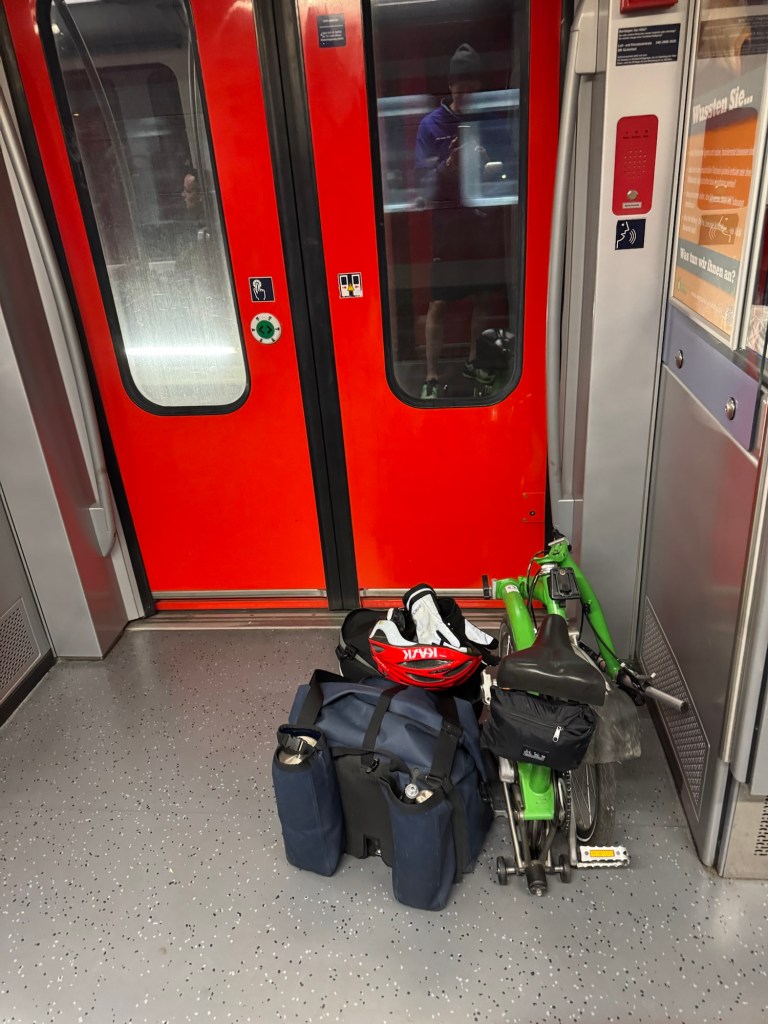
Environment, Travel

South by train – with a non-folding bicycle

Sunny start

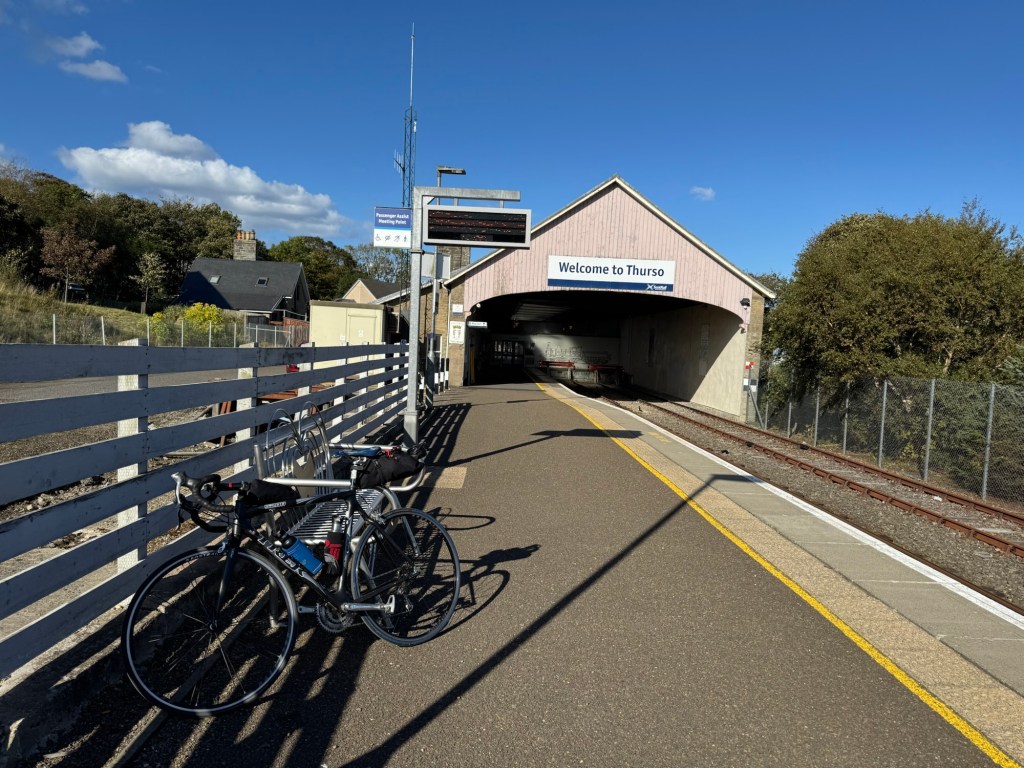
First time traveling in a long while with a non-folding bike. The chief difference is that I had to book the bike on most of the trains, including the far north line and the sleeper.

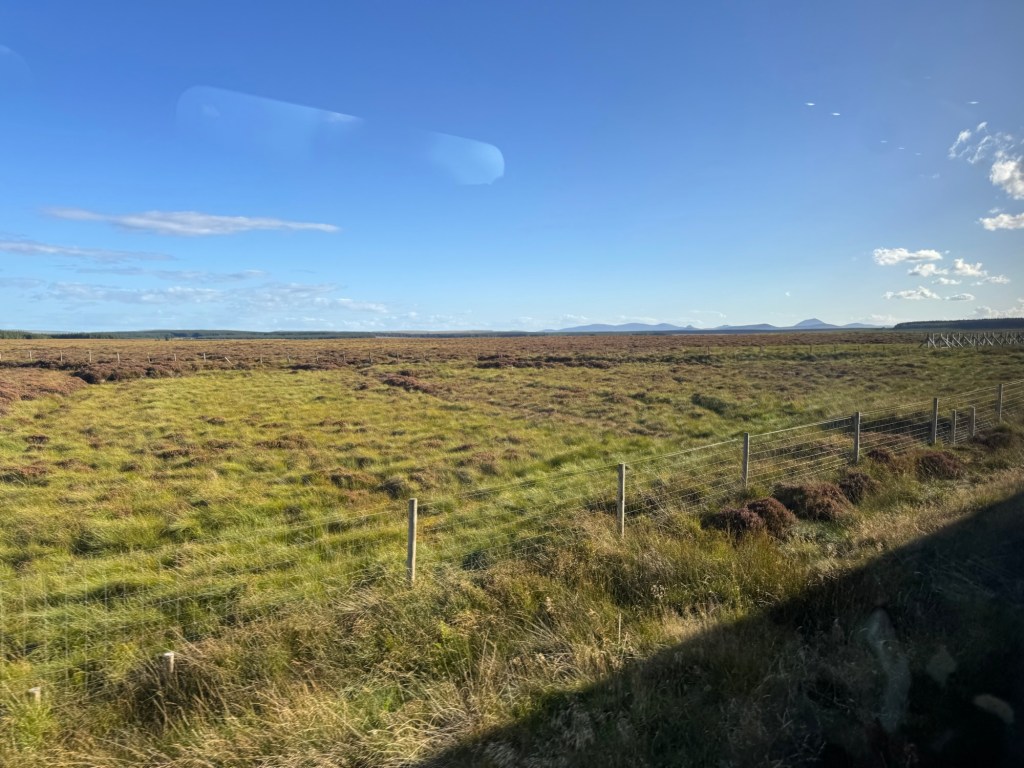
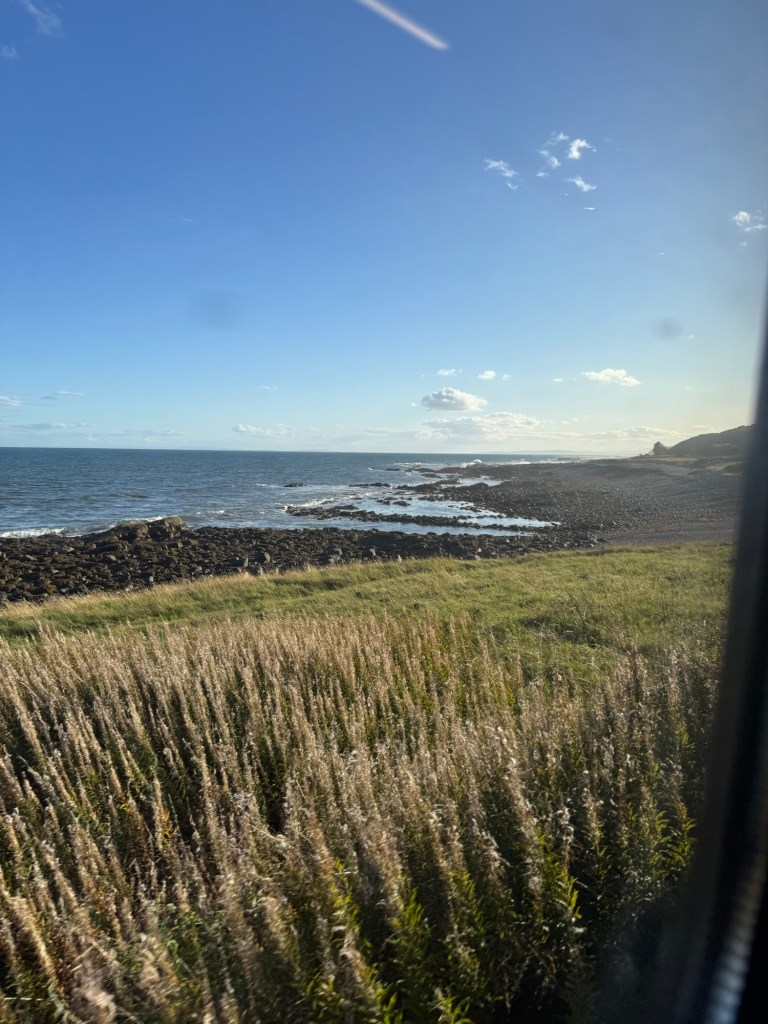
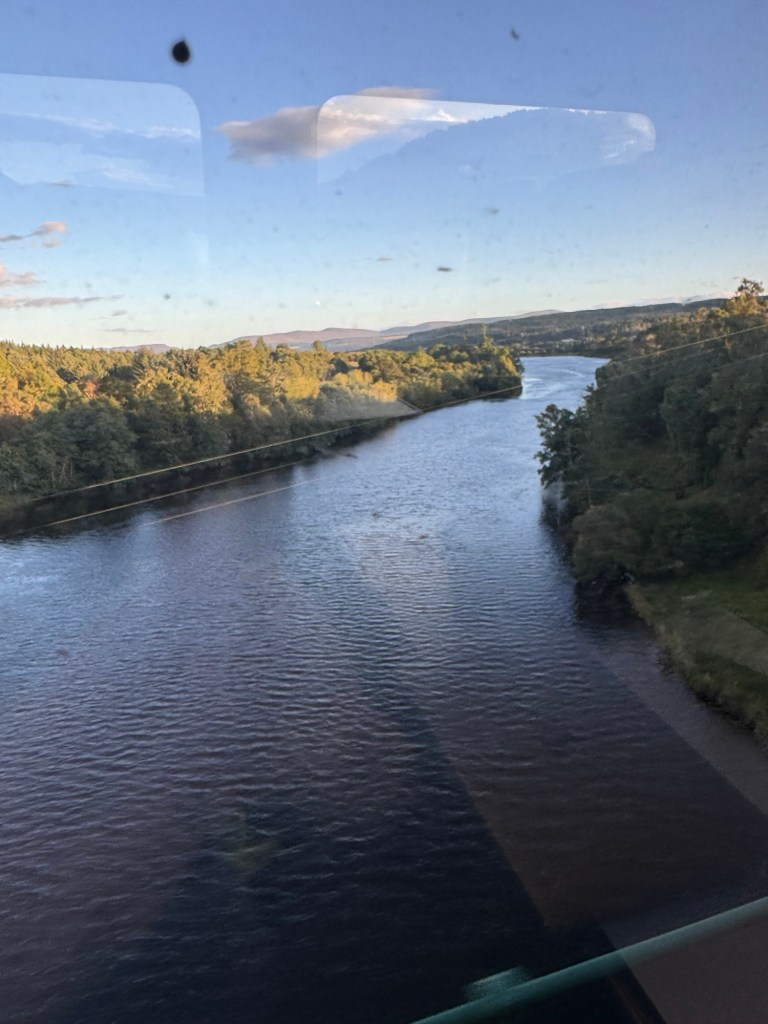
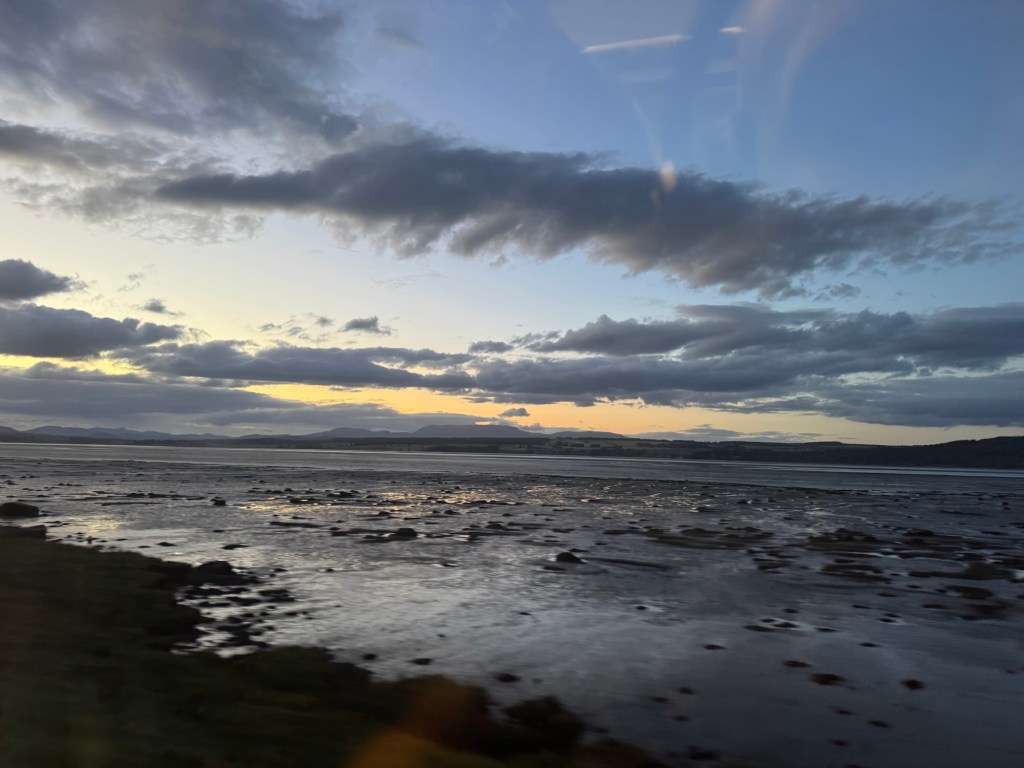
A stunning train ride to Inverness.

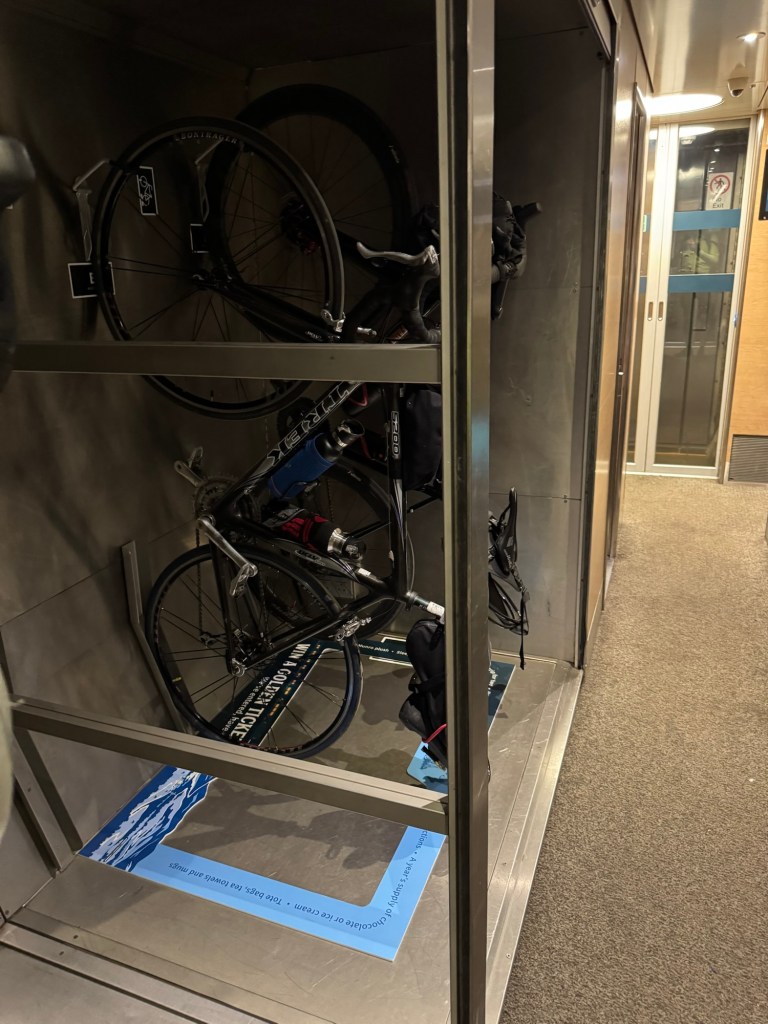
The bike went into a room on a carriage for bikes and large luggage. Not sure about the way the bike is hung up.

The bike on the sleeper.
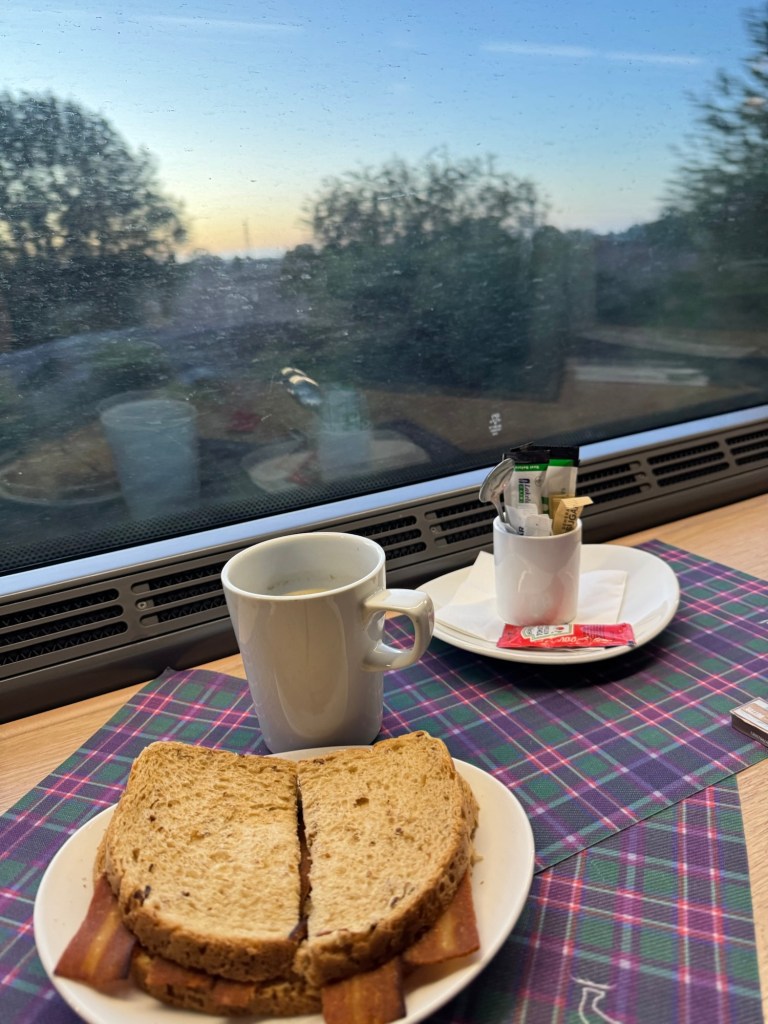
Breakfast not impressive.
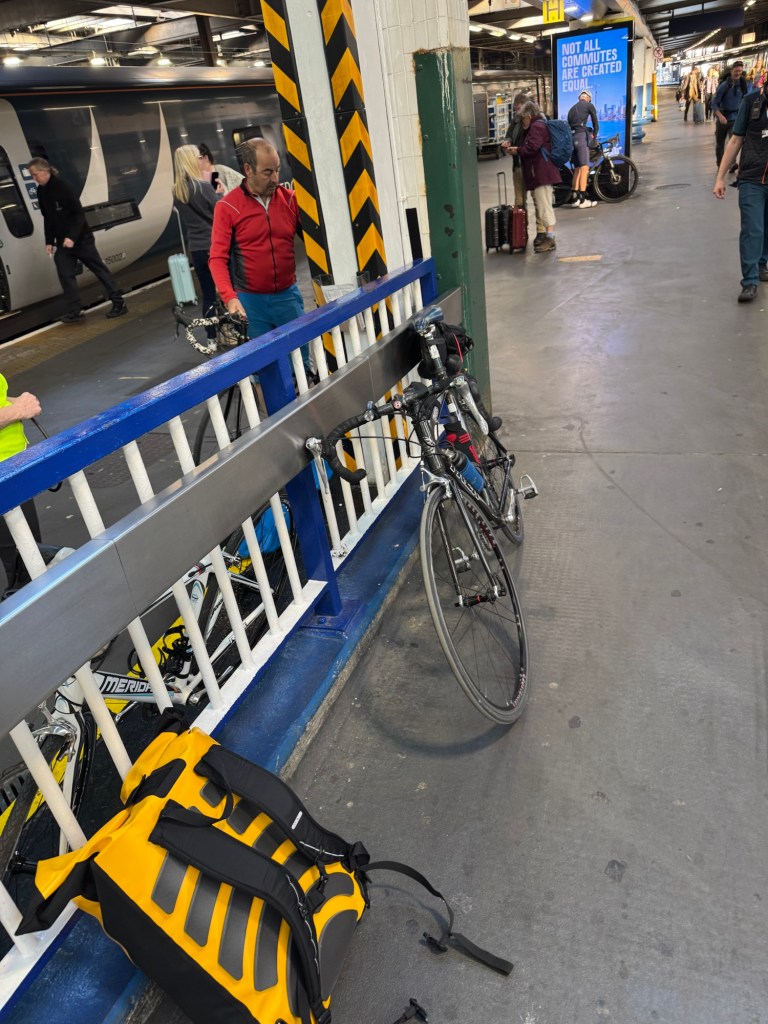
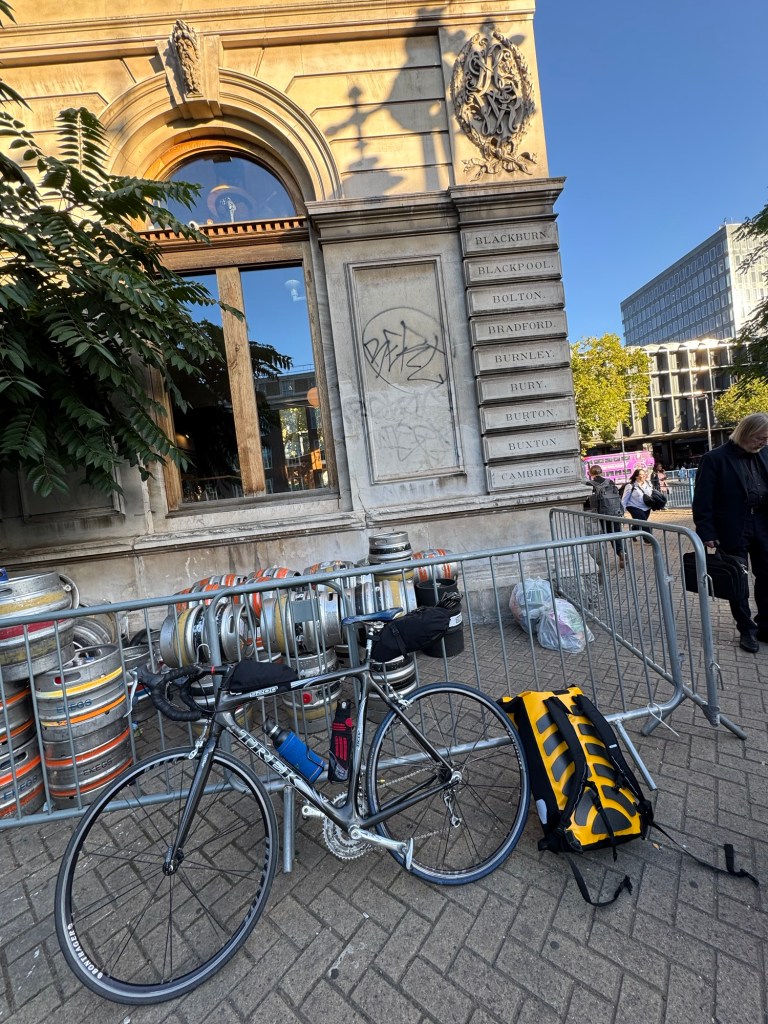
Euston station
Getting ready to ride to Waterloo.

Interesting ride, an impressive number of cyclists on route to work, some with no road sense. One, who was on my right, turned left across my path without looking or signalling.

The cycle route.
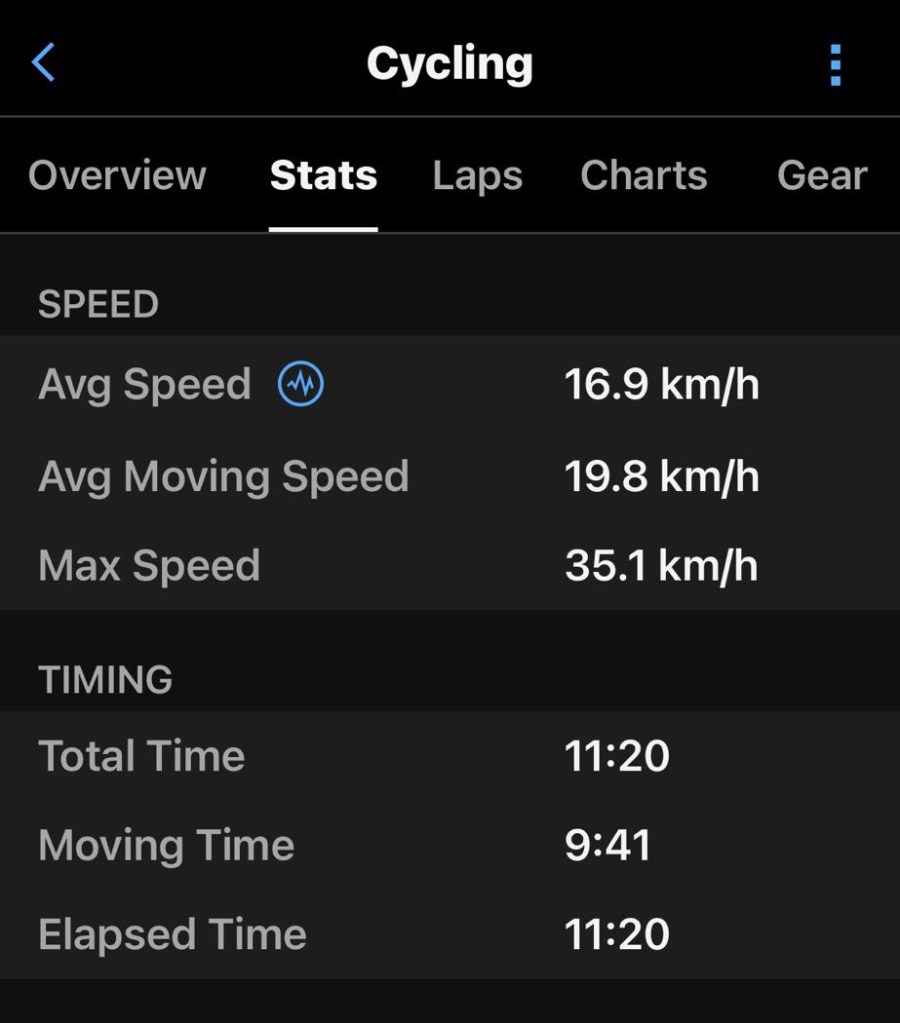
The stats.

Nice to be the fastest for a change. Faster than the bikes and the cars 🙂.

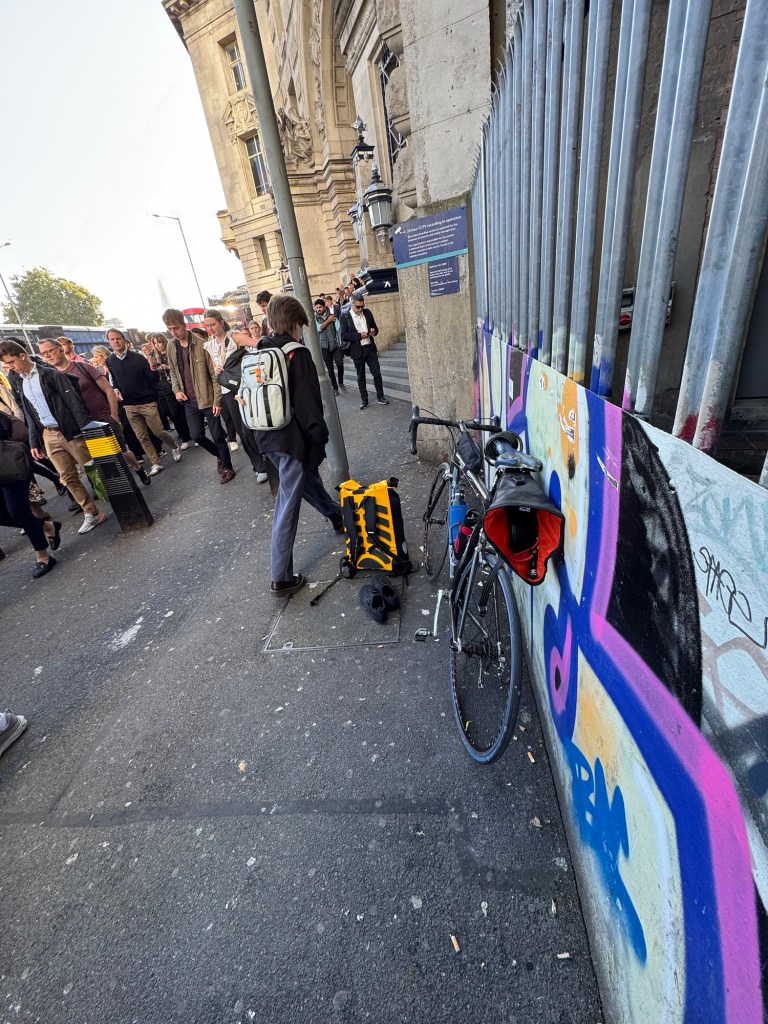
Waterloo

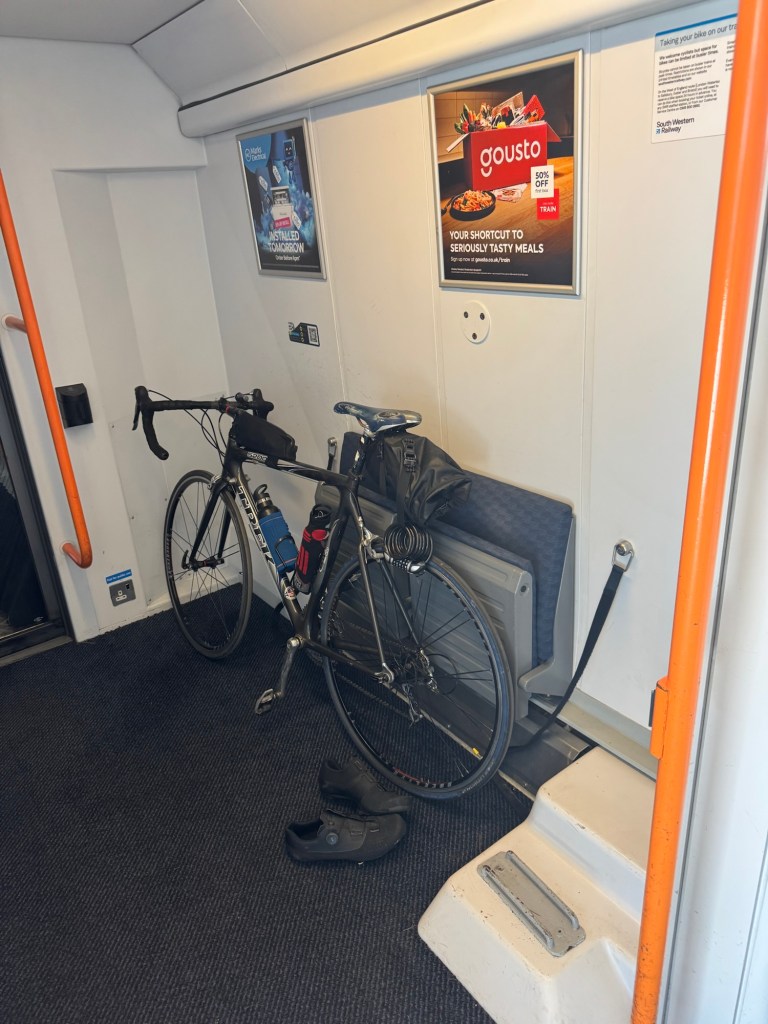
Some jeopardy getting onto the SWR train, as they don’t do bookings for bikes. Will I get a space?

On SWR Train.
Poole
Arrived at Dorchester

It only required three trains to get from the north coast of Scotland to the south coast of England. Weather good all the way,

Environment, Safety, Travel

Skewed

It is Bike Week 2025. https://www.cyclinguk.org/bikeweek.

There are a lot of misconceptions out there. This bike week I addressed a few of them. This is my last blog post on the subject, for now.

In many western countries society is skewed in the favour of cars. In the UK we have allowed cars to dominate city and town centres. This has led to many negative effects, high levels of pollution, particulate, noise and visual. Plus there is the ever present danger of injury from vehicles. We are now afraid to allow children to travel on foot or by bicycle on their own. Even parked cars take precedence over children playing. God forbid a car is accidentally damaged.

In the US, it’s worse. Who came up with the idea of jaywalking as an offence? Too many lawsuits against errant drivers? So criminalise the victims. In the UK pedestrians take responsibility for their safety and decide when to cross. In Germany the onus is on the driver. In Budapest often the drivers ignore the red lights at pedestrian crossings. In busy cities it is frustrating crossing the roads, you have to wait for the green man and watch for cyclists jumping the red lights.

The UK has made an effort to rebalance. The Highway Code has introduced the idea of the more dangerous you are the more responsibility you have. When turning left cars have to give way to cyclists and pedestrian, cyclists have to give way pedestrians. This is the opposite of might is right. Low emission zones and traffic free areas have helped improve safety and reduce pollution.

Low speed limits in built up areas, 20 mph in the UK makes life far more pleasant for pedestrians, cyclists and motorists. Reduced noise and pollution, increased safety, what’s not to like. There is still a large minority of drivers who don’t think the rules apply to them. Enforcement is an issue, but when I am driving in a 20 mph zone, all the vehicles behind me obey the speed limit 🙂.

But even in higher speed limit areas, what could be round the corner? Drive so that you can avoid mowing down the mother with pram forced to walk on the road with no pavement, who could be round the blind bend.

There seems to be a lot of overly noisy people including some politicians who object. What’s not to like about increased safety and health? Unfortunately there is a sense of entitlement amongst some drivers, nothing must impede their speed. News for you, you are not that important.

Some politicians try to create a phoney argument with phrases like “war on motorists “, a typical populist approach to gain traction with an over simplified statement with no substance or merit. There is no war on motorists in this sense, just a push to make life better for people.

There is a kind of war on motorists in the UK, and all other road users. You can see the craters everywhere on the roads. Lack of maintenance a false economy. Today I hit a pot hole on my bike and ended up with a puncture.

Could things get more skewed across the world as driverless cars come into use? The offence of jaywalking makes it far easier to have poorly performing driverless cars on the road. Policy makers in all countries, protect people first, not car makers.

The UK has improved, you can see that in driver behaviour, but has more to do. Don’t allow repeat offenders to stay on the road. Speeding, reckless driving should be treated more seriously. Change the attitude of drivers so driving too close to cyclists and pedestrians and other vulnerable road users such as horse riders is absolutely frowned upon. Make towns and cities safe for people, especially children.

Environment, Travel

No one pays road tax!

One of the common moans about cyclists, is that they don’t pay road tax. This is true, but no road users pay road tax. But owners of motorised vehicles do need to pay a vehicle tax https://www.gov.uk/vehicle-tax-rate-tables. There is no requirement to pay a vehicle tax for a bicycle. This makes sense as for newer vehicles the vehicle tax is related to how polluting a vehicle is. Bicycles produce next to no pollution. Even electric cars pollute, the brakes and tyres produce particulates.

I am going to look at the tax situation from a different angle.

Most adult cyclists do pay tax which contributes to the upkeep of roads, it’s called income tax. Given the extreme low levels of damage to roads from cyclists and the extremely low level of pollution from cyclists, it seems unfair that cyclists pay as much income tax as drivers. People who do not own motorised vehicles are subsidising the owners of motorised vehicles. Cyclists who reduce their motorised vehicle usage due to cycling should be thanked for reducing their contribution to causing pot holes.

There is of course taxation on petrol and diesel. But given the damage to people’s health and to the environment from vehicle emissions , I suspect that this is not enough.
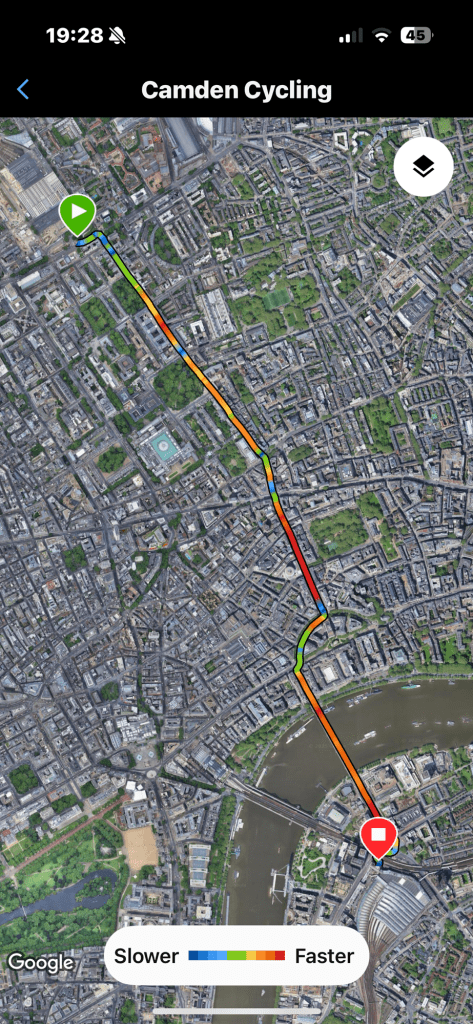
Thank you cyclists, a group who are actually reduce the tax burden.

Environment, Safety, Travel

Cyclists have to use cycle lanes❌

In the U.K. this is not true, as rule 61 of the Highway Code says.

Referring to cycle lanes and cycle tracks “While such facilities are provided for reasons of safety, cyclists may exercise their judgement and are not obliged to use them.”

The Highway Code defines what cycle lanes and cycle tracks are, they are different.

A cycle lane is marked on the road, with either a solid line or a broken line. Vehicles cannot drive in cycle lanes marked by solid lines or park in them. From my observations this is not observed. A cycle lane which is only half a meter wide are worse than useless. There’s not enough space between the bike and the vehicles, and does not comply with Highway Code rule 72. I recently saw useless cycle lanes of this nature in Guildford and Wallingford. This is the part of the road which collects debris.

Cycle tracks are routes physically separated from vehicles, so, they should be good. Unfortunately in the UK they are often poorly designed, with dangerous entry and exit points, obstructions, debris, poor surfaces and no right of way when crossing side roads.

Why would a cyclist not use cycle lanes and cycle tracks? For the reasons described above, the UK cycle infrastructure is often useless. The UK needs to look abroad to see how to make proper cycle infrastructure.

Environment, Travel

Bikes hold up traffic❌Cars hold up traffic✅

You are driving along and there’s a bike in front of you going at a slower speed. Impatience builds, you can‘t get past. Bl**dy cyclist🤬.

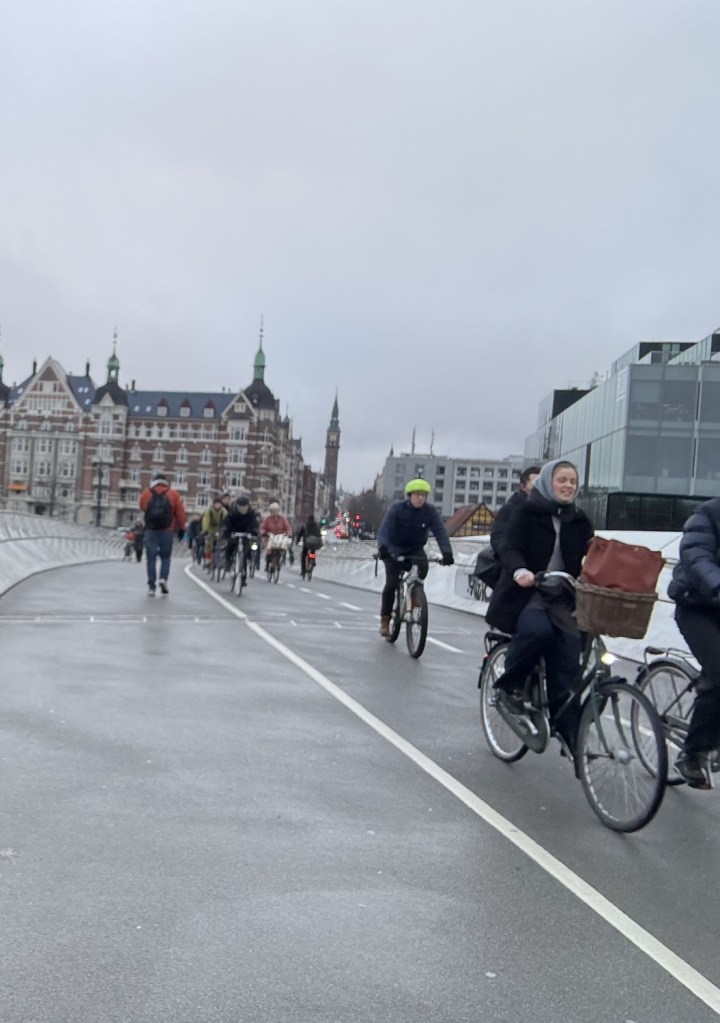
In reality you may have a perceived delay of a few tens of seconds. But as you speed on to the next queue of vehicles , where you lose minutes, the bike made no difference. And why can’t you overtake the bike? Because of the oncoming traffic. The problem is the excessive number cars not the bike.

But it’s worse! In 2024 the average UK driver lost 62 hours due to traffic congestion. That’s more than two and a half days. In London that’s 101 hours. That’s a lot of time spent staring at someone‘s rear bumper. Look for INREX 2024. This is due to excessive number of motorised vehicles.

Traffic also delays pedestrians, you can’t get across the road due to the traffic wizzing past. Cars also delay cyclists, sometimes it’s impossible to get out of junction due to the traffic. The congestion also gets in the way of emergency vehicles.

I have had cars overtake me while I was cycling, stopping just in front of me, to turn right, which they can’t due to the oncoming traffic. Its then tricky to get past the immobile blockage on the road. Waste of my time and very rude.

There is another cost of congestion. Pollution! Shortens the lives of the drivers and the non drivers.☠️

The way to reduce that wasted 62 hours or 101 hours in London is to get on your bike. Reduced delays for you riding the bike, reduced traffic because you are riding your bicycle instead of driving. Less congestion, reduced delays for those in the cars. Everyone is happy.

It is Bike Week 2025. https://www.cyclinguk.org/bikeweek.

There are a lot of misconceptions out there. This bike week I thought that I would address a few of them.

Environment, Safety, Travel

Cyclists should be as near the kerb as possible ❌

This is rule 72 from the Highway Code:

72
Road positioning. When riding on the roads, there are two basic road positions you should adopt, depending on the situation.
1) Ride in the centre of your lane, to make yourself as clearly visible as possible, in the following situations

  • on quiet roads or streets – if a faster vehicle comes up behind you, move to the left to enable them to overtake, if you can do so safely
  • in slower-moving traffic – when the traffic around you starts to flow more freely, move over to the left if you can do so safely so that faster vehicles behind you can overtake
  • at the approach to junctions or road narrowings where it would be unsafe for drivers to overtake you

2) When riding on busy roads, with vehicles moving faster than you, allow them to overtake where it is safe to do so whilst keeping at least 0.5 metres away, and further where it is safer, from the kerb edge. Remember that traffic on most dual carriageways moves quickly. Take extra care crossing slip roads.

So it’s ride at least 0.5 m from the kerb but in some circumstances in the middle of the lane. In particular when the road is narrow, so it is unsafe for the vehicle to overtake the cyclist.

It is Bike Week 2025. https://www.cyclinguk.org/bikeweek.

There are a lot of misconceptions out there. This bike week I thought that I would address a few of them.

Number one – not particularly contentious, it’s in the Highway Code.

Environment, Tourism, Travel

Thurso to Bucharest and back- the summary

The journey

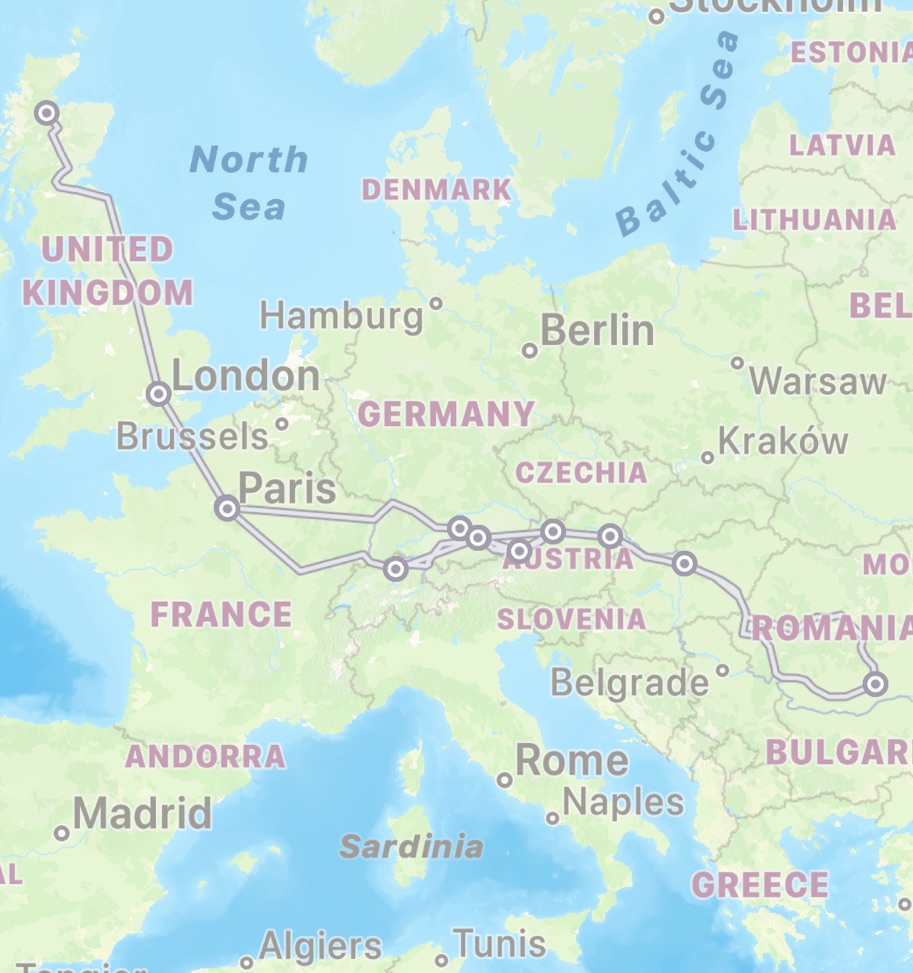
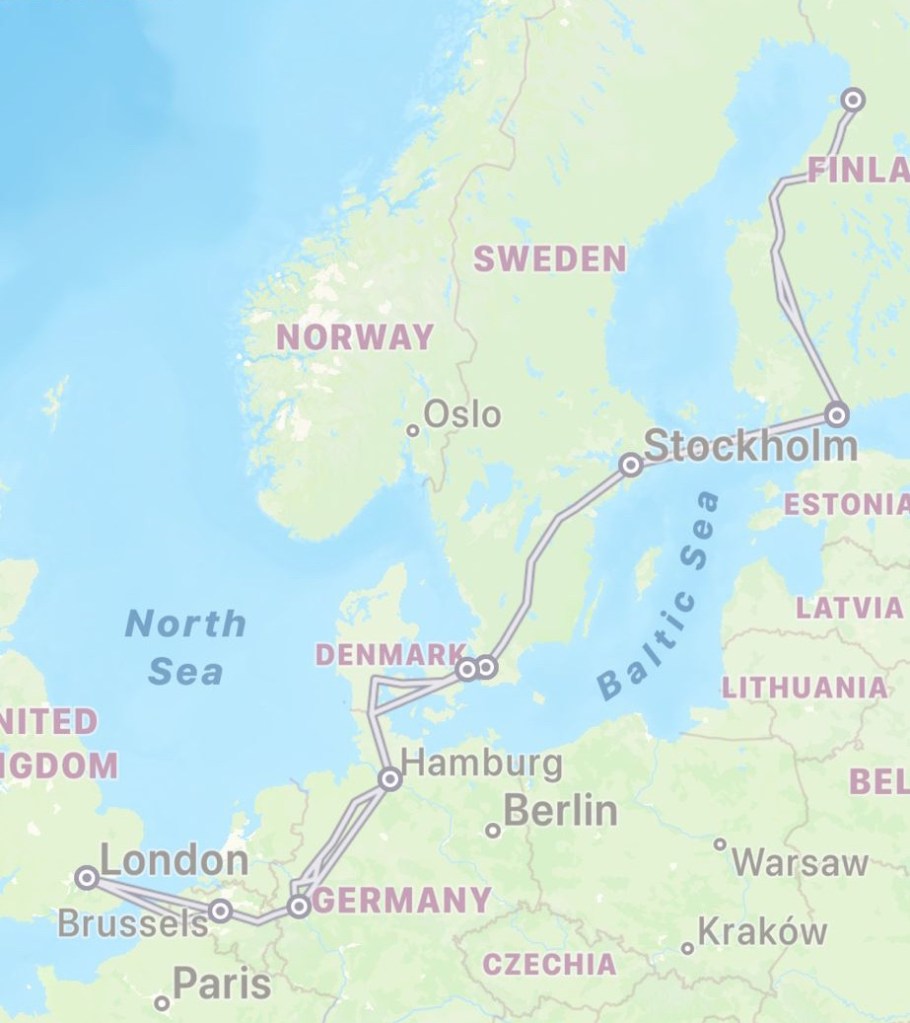
The map taken from the Interrail app shows just how far the journey was, but misses the far north line and the detour to Oxfordshire.

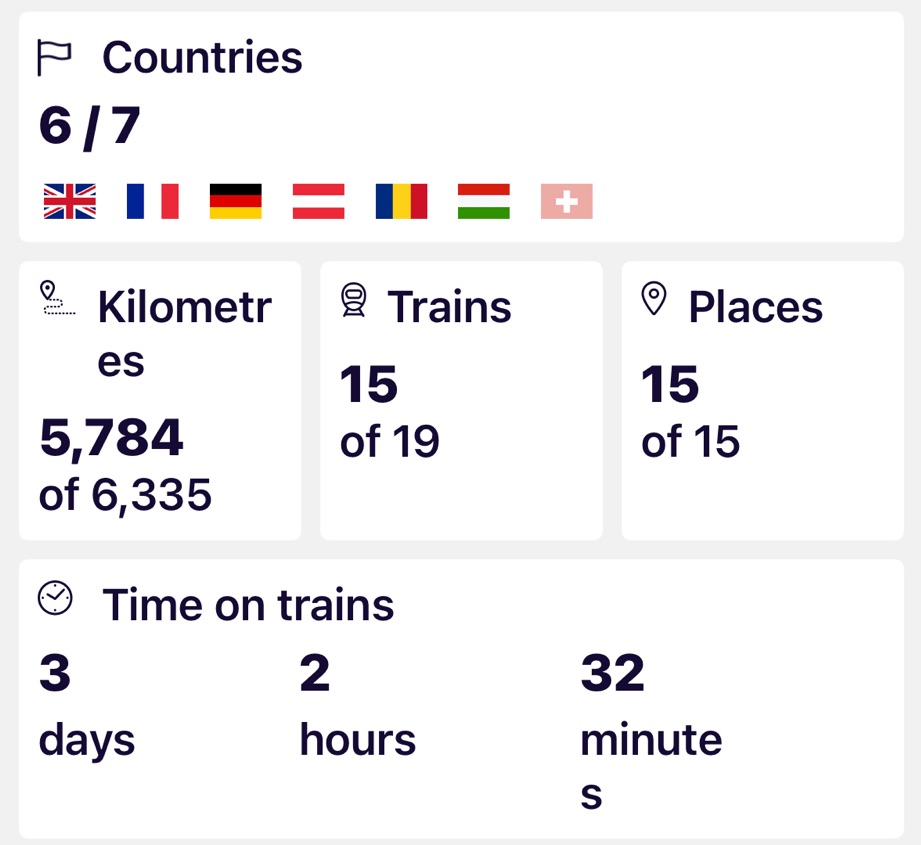
From the Interrail app: 5784 km distance

15 trains on the Interrail ticket, 20 in total.

Seven countries.

Weather

Sunny almost throughout, but a big variation in temperature. Highest ,around 14 centigrade in Augsburg, lowest -10 in Bucharest.

Food

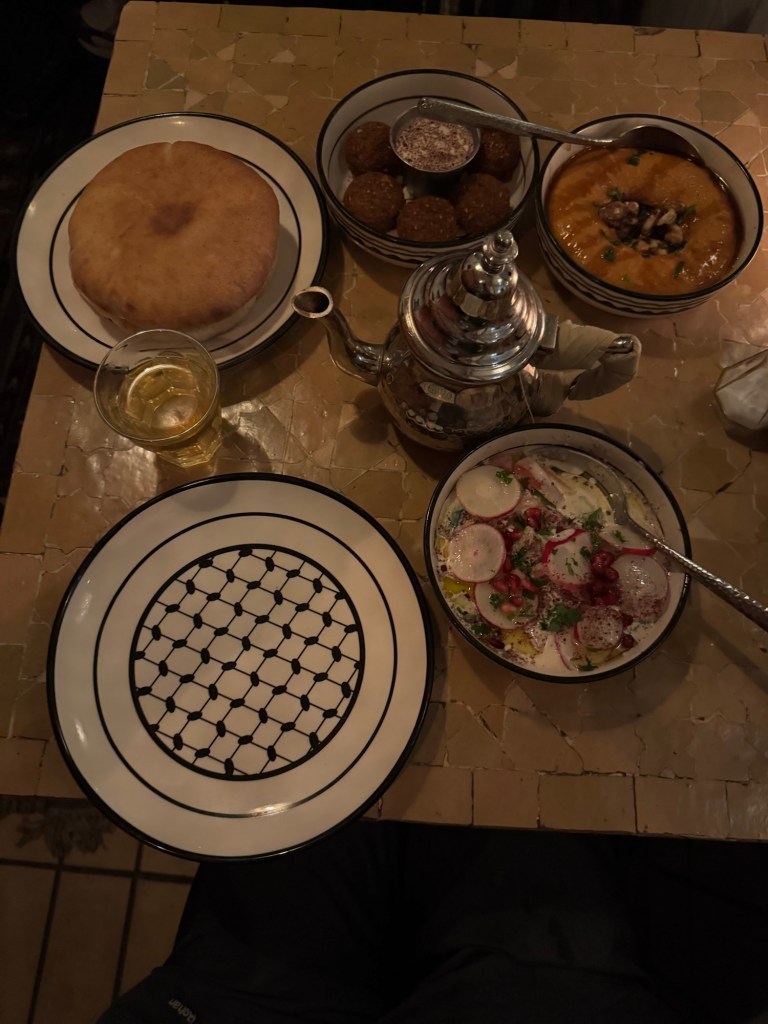
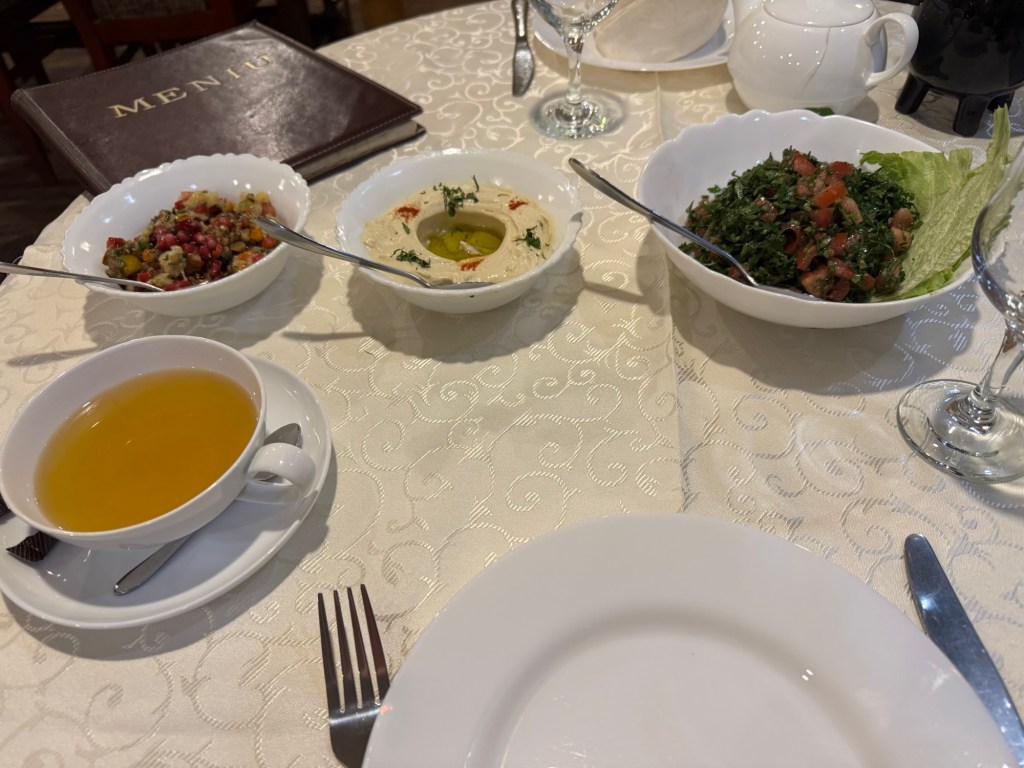
The food was good, but had to get creative in the meat centric countries. I had my first experience of a Lebanese restaurant in Bucharest, the very good Coin-Vert Libanez.

I had to fight through the snow and ice to get to it. A week later I had my second Lebanese restaurant experience in Paris.

Plenty of good food on this trip.

Hotels

I stayed in three Premier Inn plus rooms, three varieties of Ibis: budget, styles and no moniker, a Radisdon Individuals Schiller Park in Linz and Ramada by Wyndham in Bucharest.

Best bed:Premier Inn plus

Best shower: Premier Inn plus

Best view: Ramada by Wyndham

Best location: Hotel Schiller Park- in central location near the railway station.

Best breakfast: Ramada by Wyndham

Best rooms: Premier Inn plus

Most expensive: Premier Inn St Pancras

Best check out times: Ibis / check out by noon.

I like the simplicity of the Ibis Budget.

Locations

Both Augsburg and Linz were amazing places to visit. Smaller and not as busy as Vienna but interesting buildings and history. Bucharest lacked the beautiful buildings but the lake was beautiful.

Travelling by train emphasised the change in landscape and buildings. Farmhouses are tiny and ramshackled in Romanian but huge and well maintained in Austria and Germany.

People

As well as meeting the natives of each country that I visited I was surprised to meet people from so many other countries. I had conversations with Qataris, Russians, Albanians, Norwegians, New Zealanders, Moldovans, Canadians, Taiwanese and probably more. Talking to Austrians in German with their local accents was a joy, including a woman in her 90s from Vienna,

Cycling

Cycling was awful in Bucharest, but faster than cars. Driving in Bucharest also looks awful. Paris cycle way provision is good in Paris, but blocked by vehicles on the Sunday. Vienna was busy, Augsburg pleasant. I heard a tram hitting a car in Vienna and saw the massive crumpled side of the car, the tram just drove off. The closest I came to an accident was Inverness, where a car was being driven at 60 mph in a 30 zone, as I was turning right. The bike gave a good way to cross cities between stations and to get to hotels. It was also a great luggage trolley.

Environment, Tourism

Hamburg

Hamburg combines a massive port, industry with a beautiful city including two large lakes, Binnen Alster and the Außen Alster. Lots of history, lots of culture, lots to see. And the there is the Elbe, used by ships to reach Hamburg, which is inland. The container port is built on the Elbe.

Hamburg has a really good public transport system including the S Bahn.

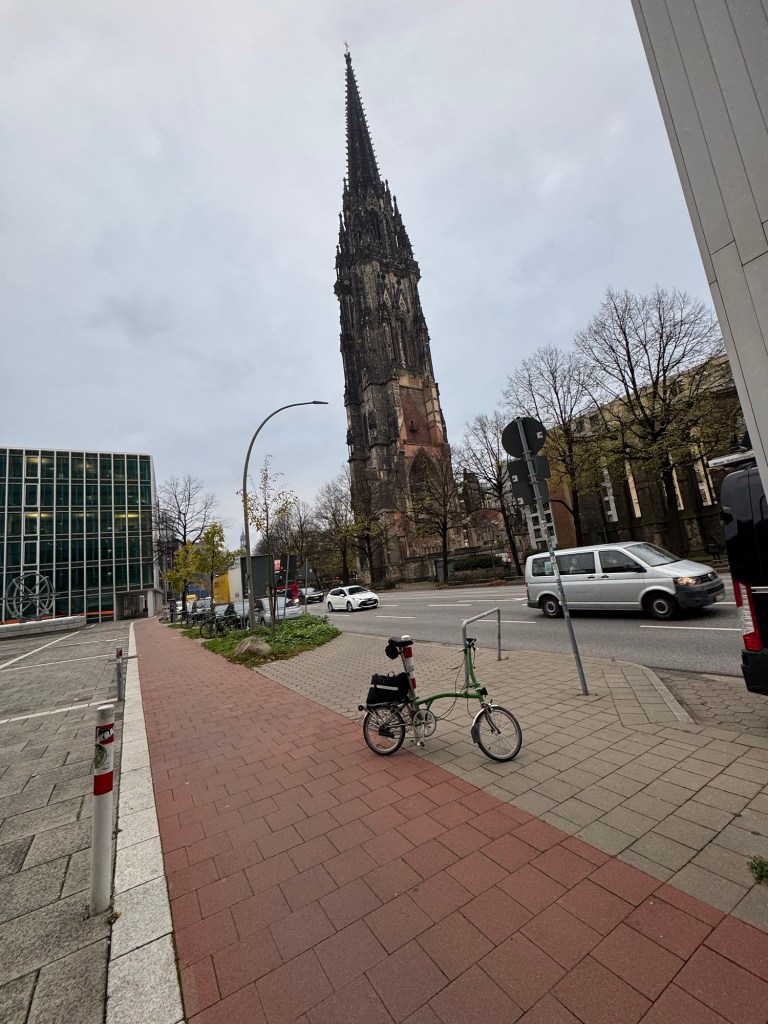
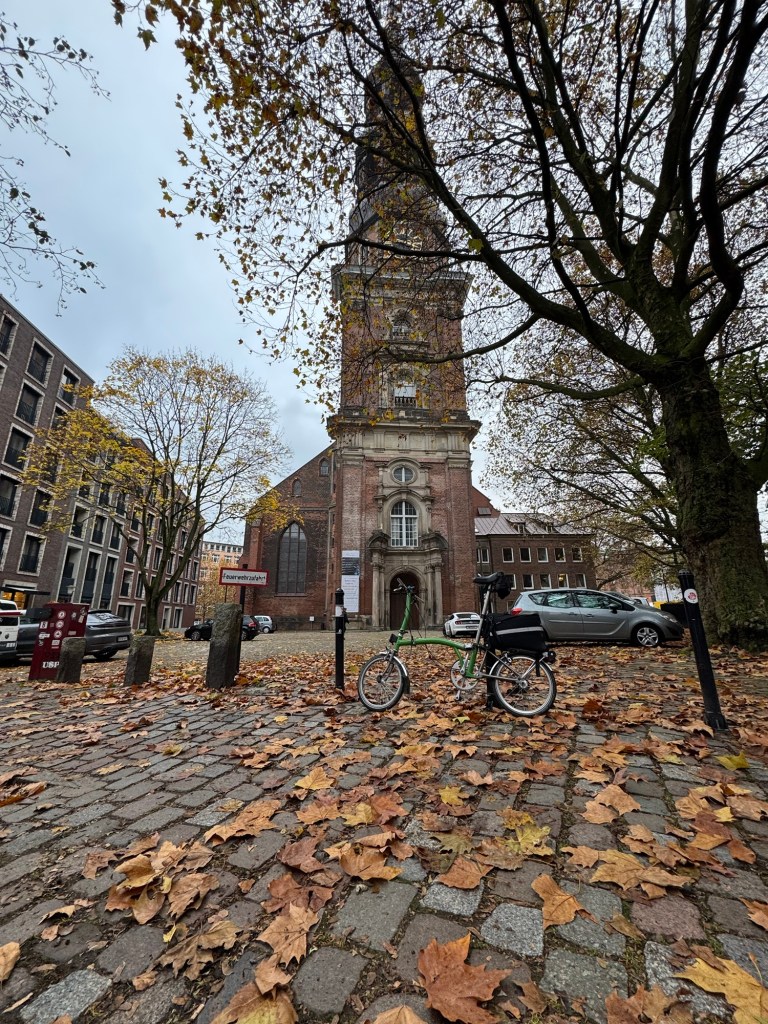
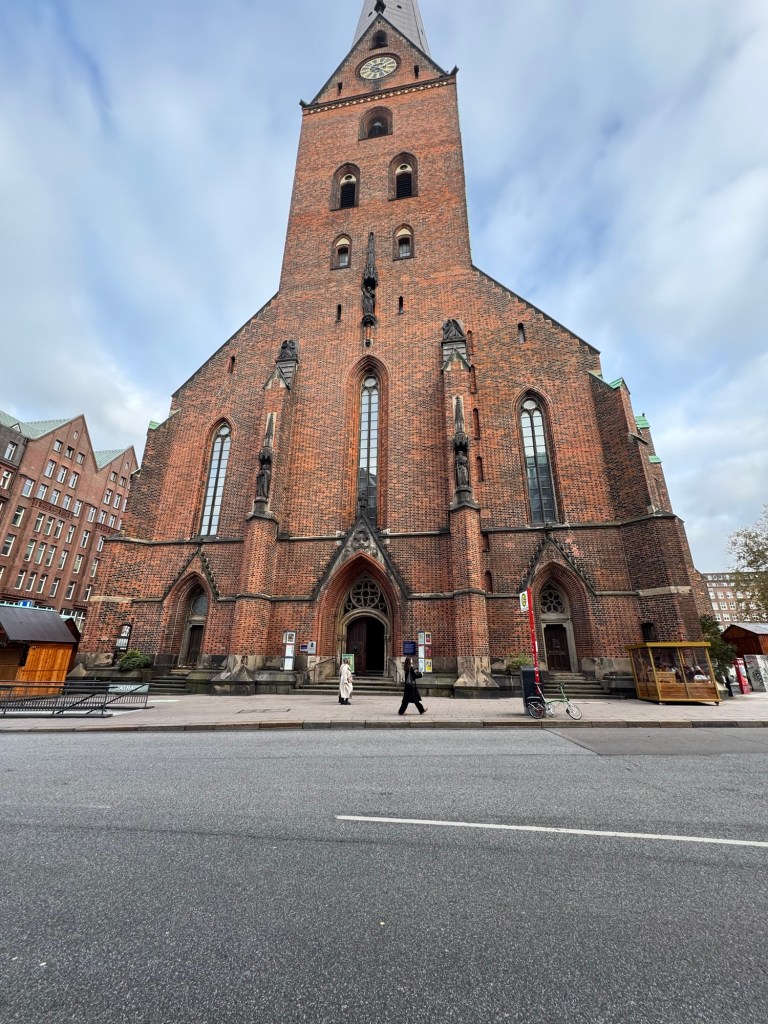
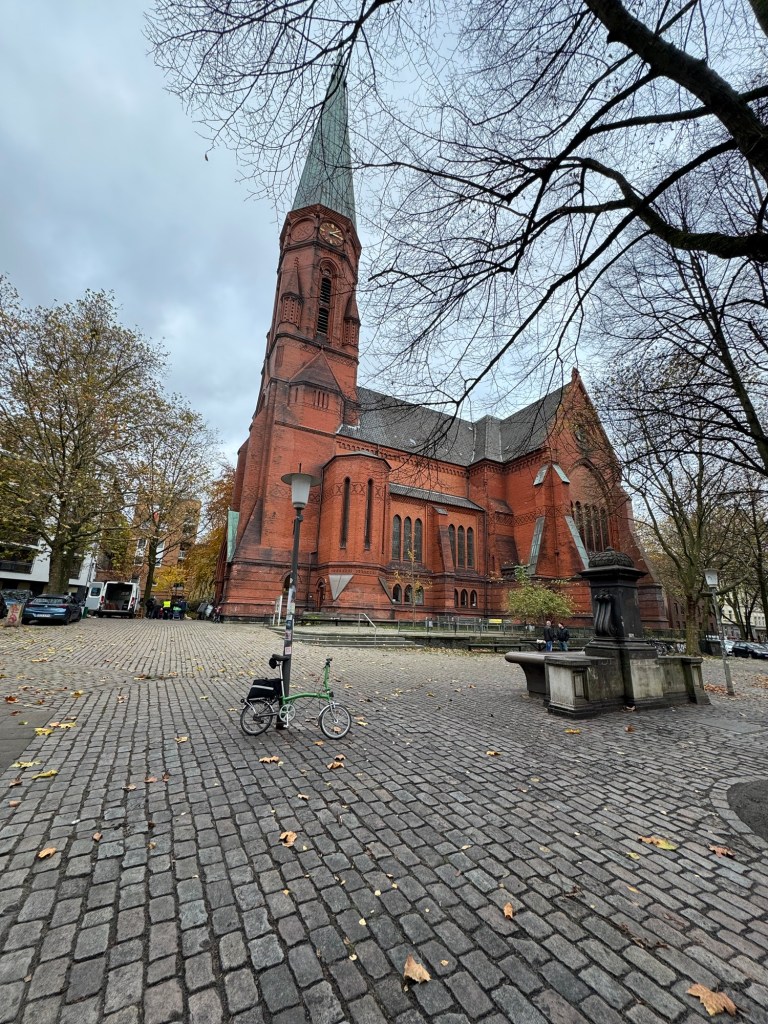
Hamburg has a number of impressive churches.

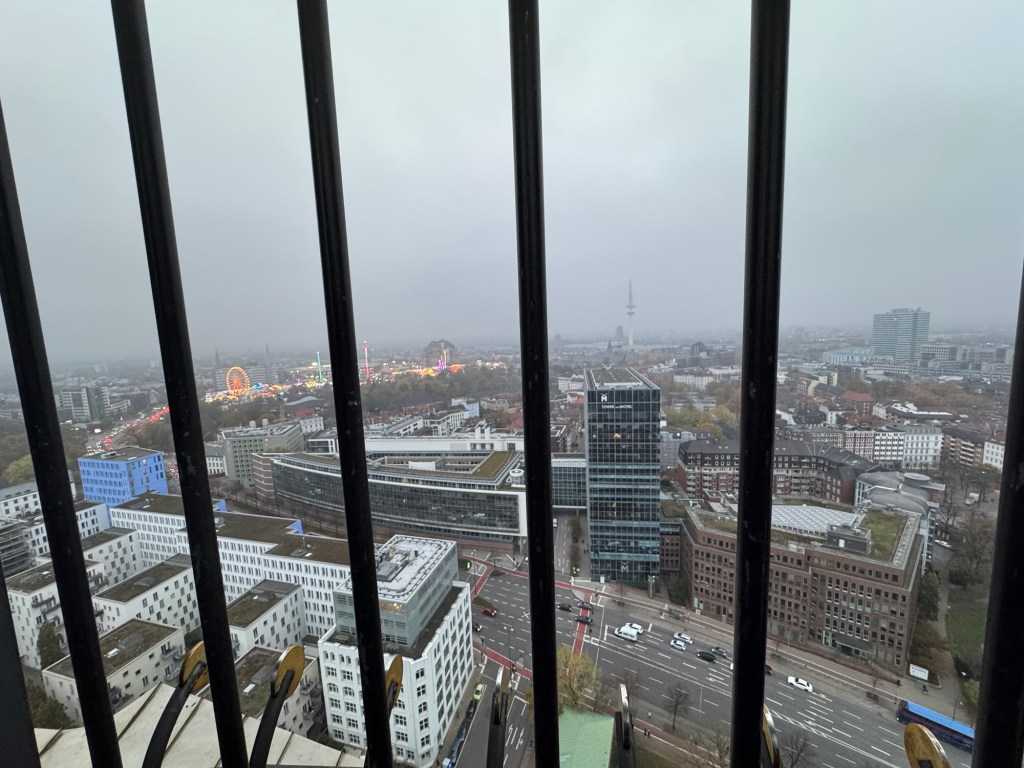
View from the St Michaelis , including the Hamburger Dom.
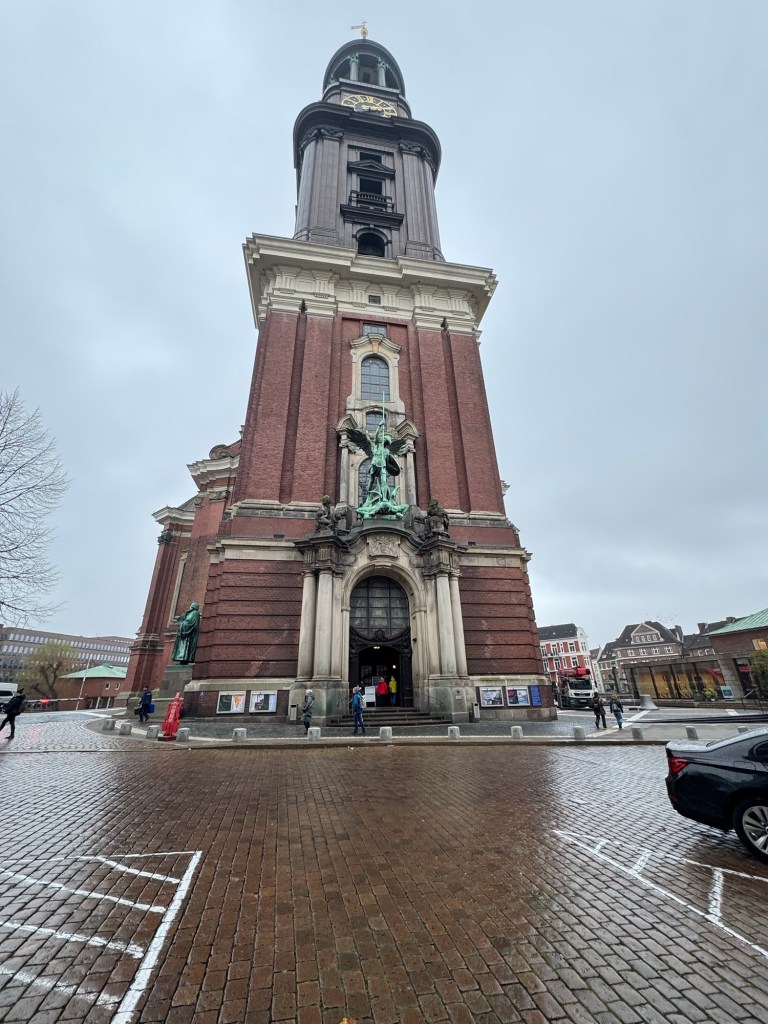
St Michaelis
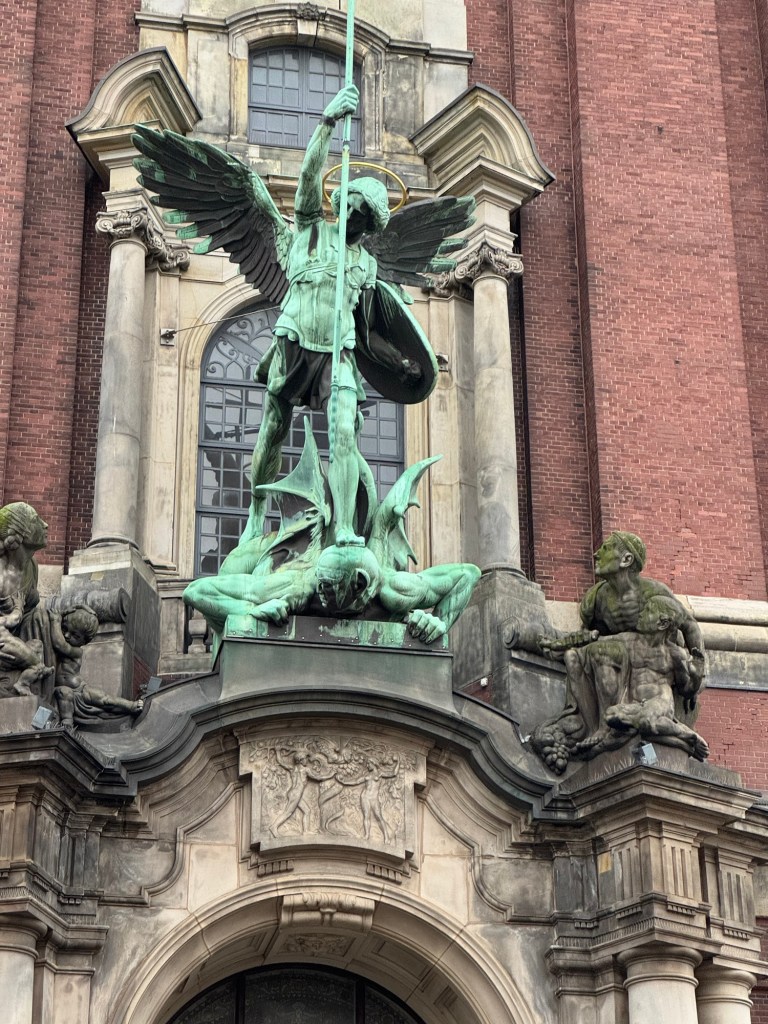
Close up
St Nicolai Kirche
St. Katharinen Kirche
Petrikirche- the oldest site for a church.
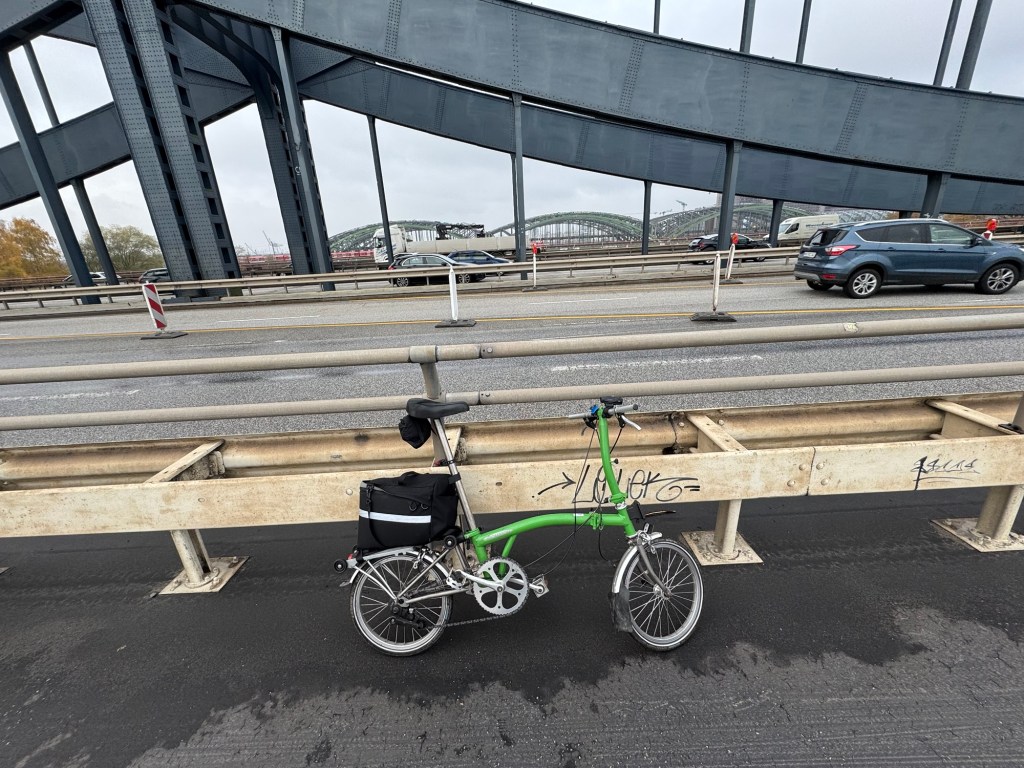
Altona Kirche

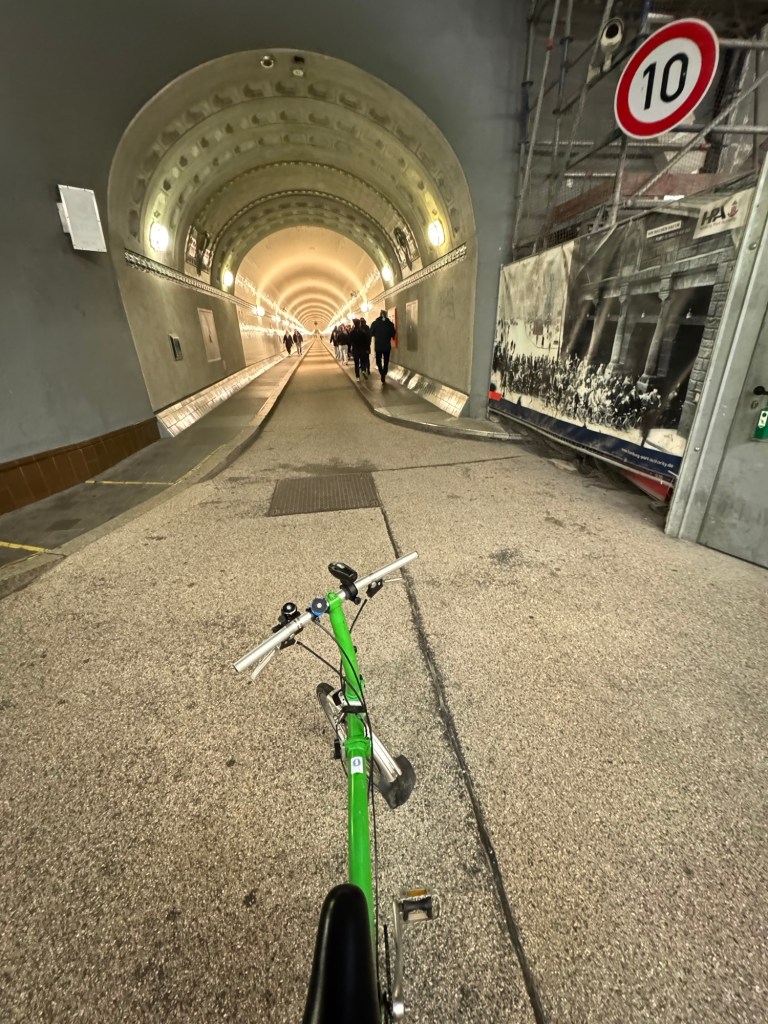
Not as old as the churches is the Elbtunnel opened 1911. You can cycle or walk through it, free of charge.
View down the tunnel from the north side.
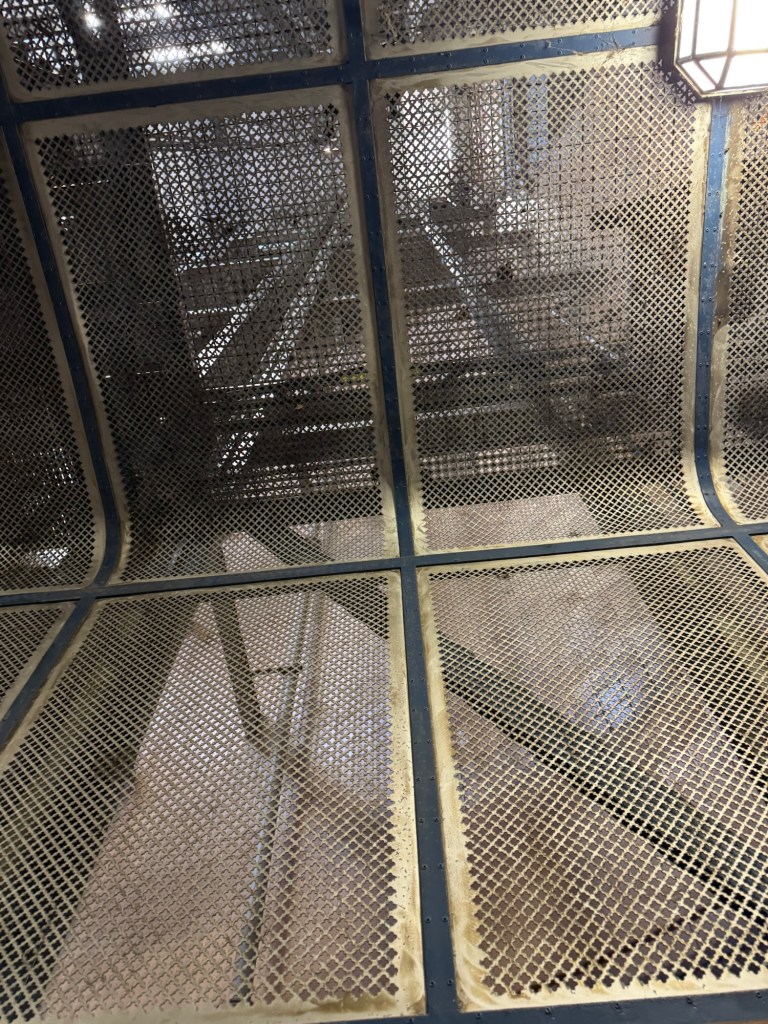
Looking up on the south side.

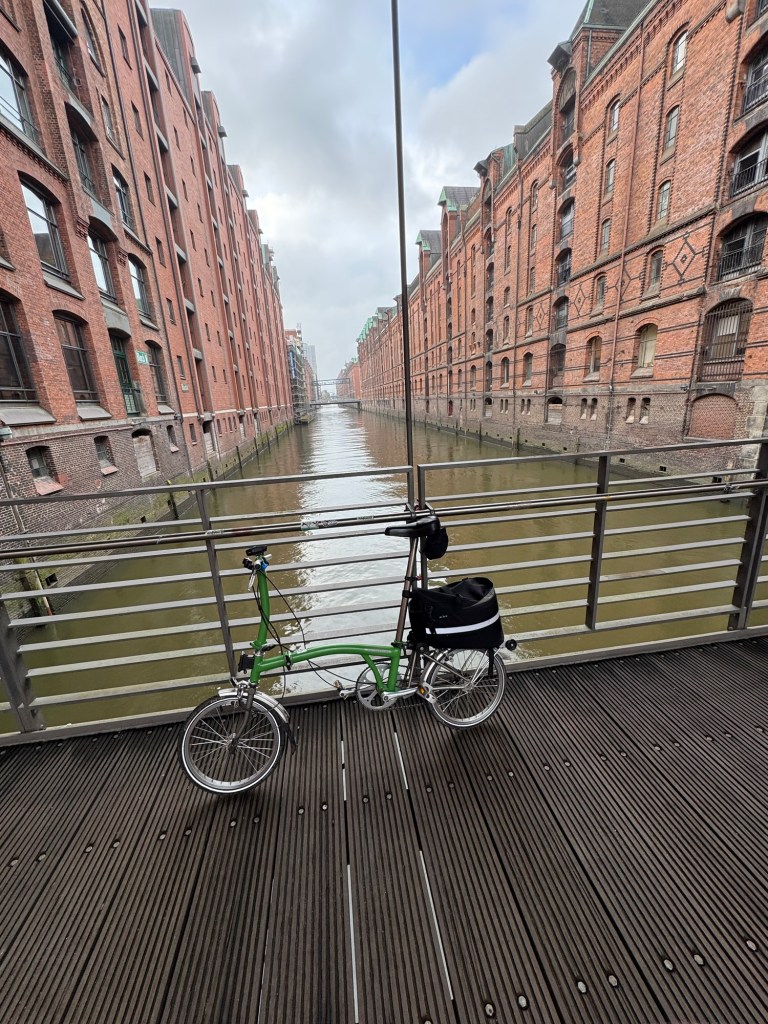
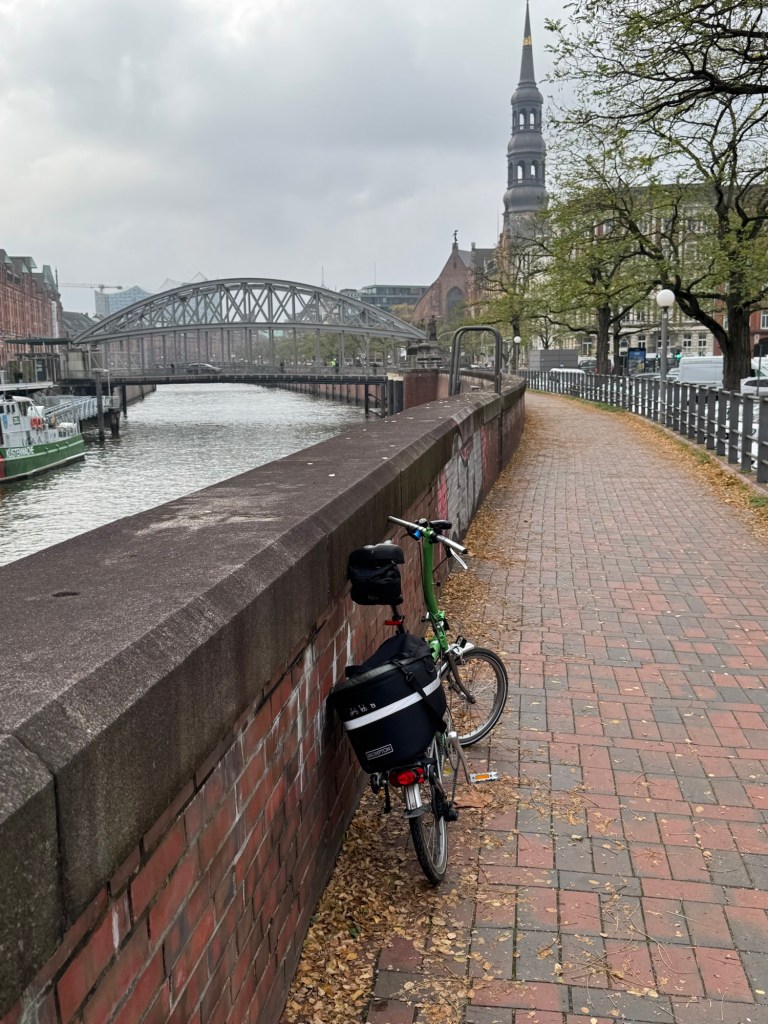
And then there is the Spiecherstadt. A complex of old warehouses next to canals. Now mainly repurposed.

A view of the warehouses next to a canal.

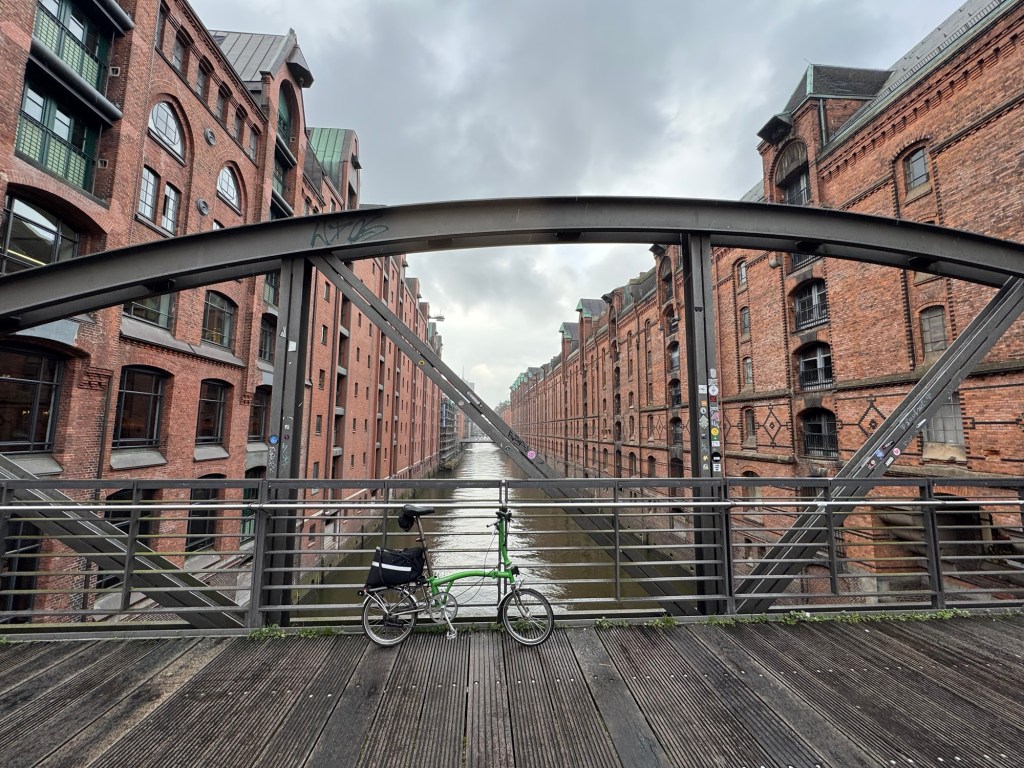
Some of the bridges have two levels.

Warehouses, picture taken from above the previous picture.

There are other interesting buildings.

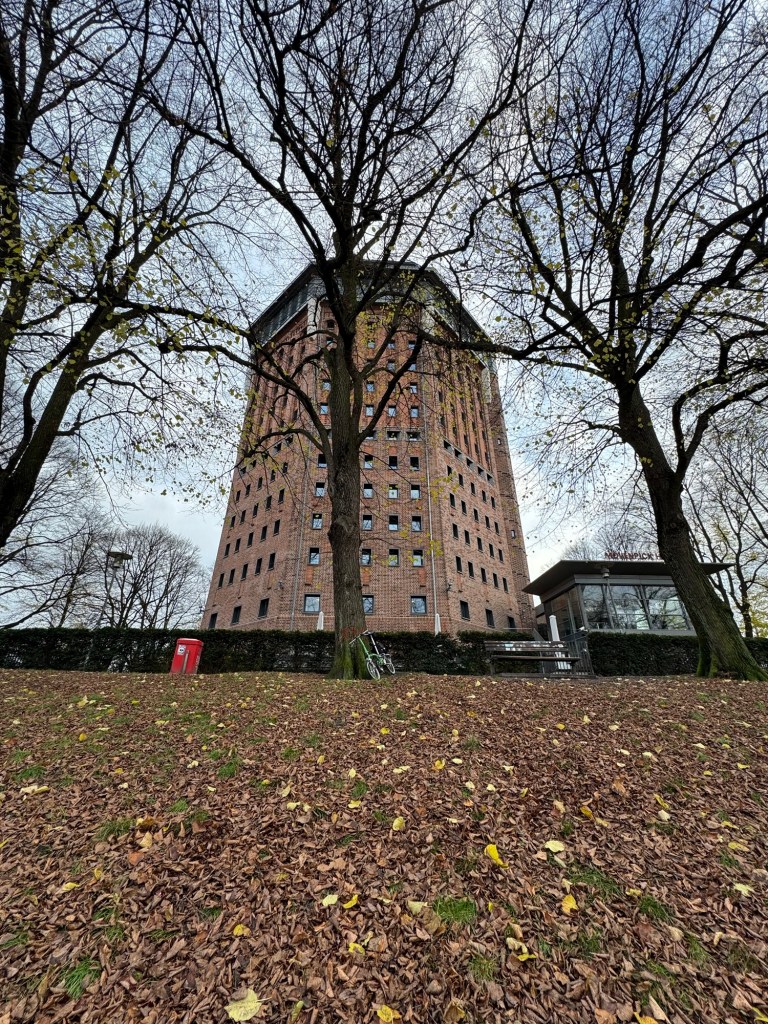
Schanzenturm- now a hotel. Formerly the biggest water tower in Europe.
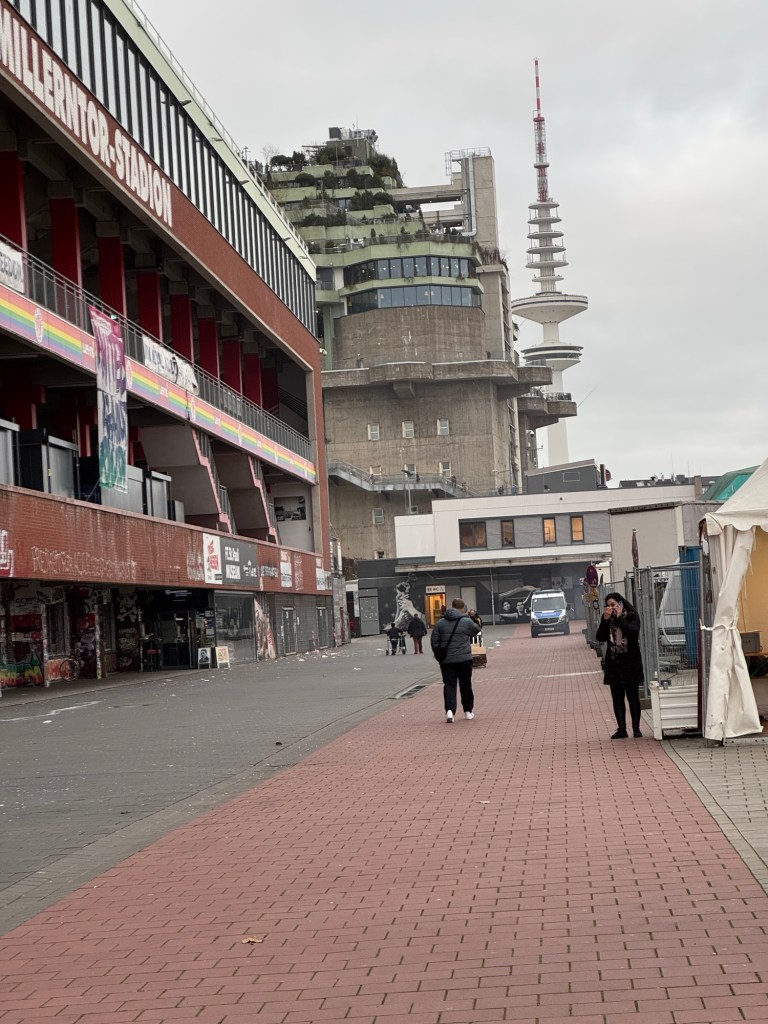
FC St Pauli stadium, Grüner Bunker and Fernsehturm.

The former bunker now has a garden on top.

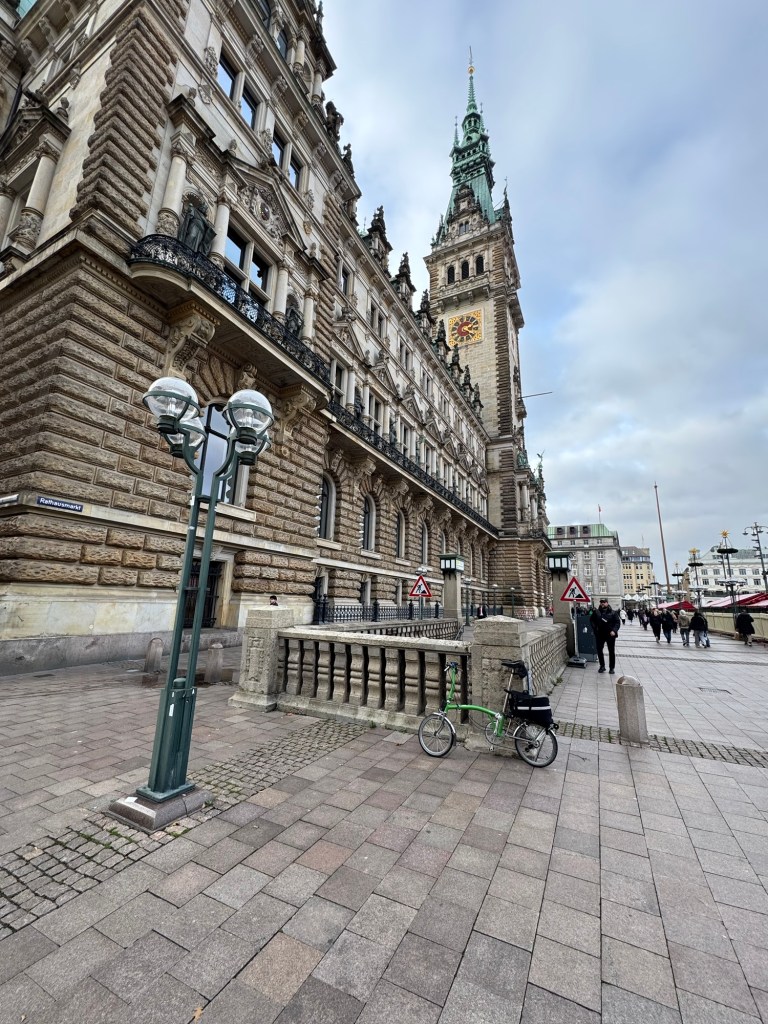
Hamburger Rathaus

Every year the Hamburger Dom takes place in Winter. It has its origins in the 11th century.

There is a lot of culture in Hamburg, with the Elbphilharmonie standing out as a landmark, built on top of some warehouses.

Elbphilharmonie partially hidden by the bridge to the Spiecherstadt. St Katharinen Kirche in the background.

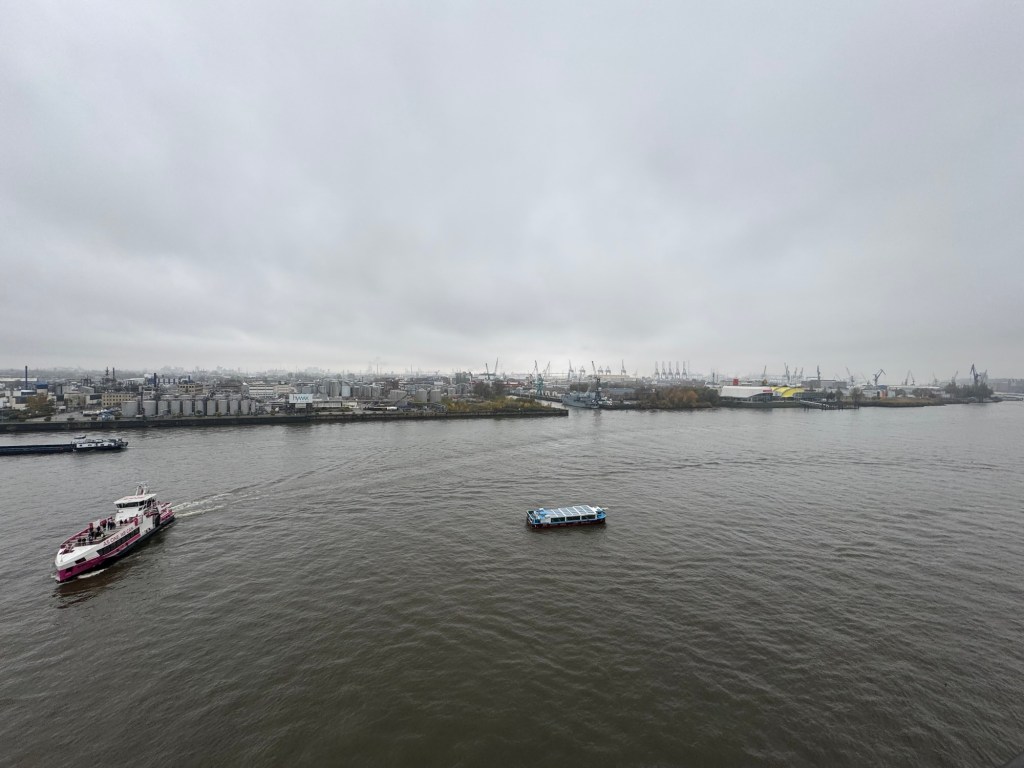
The Elbphilharmonie is a good place to view Hamburg and the Hafenstadt.

A view from the Elbharmonie.
The Elbharmonie has a long curved escalator.

The port is huge, the third largest in Europe. The Elbe gives an advantage, bringing goods inland reducing costs, but the downside is as the ships are getting bigger they can no longer travel up the river.

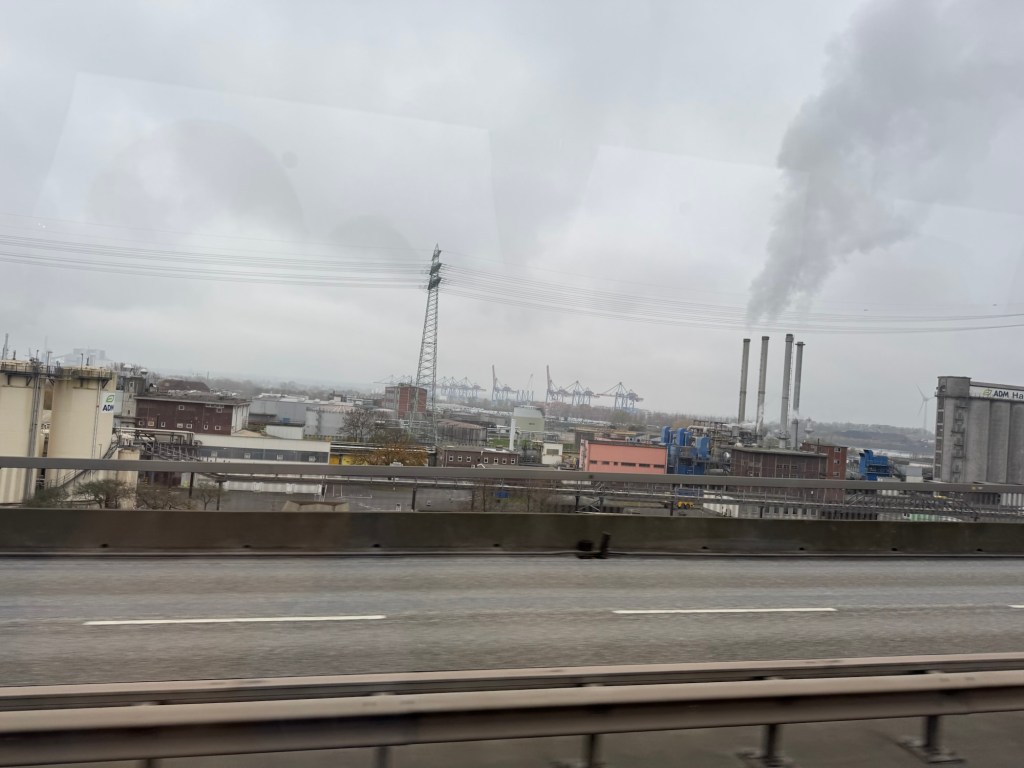
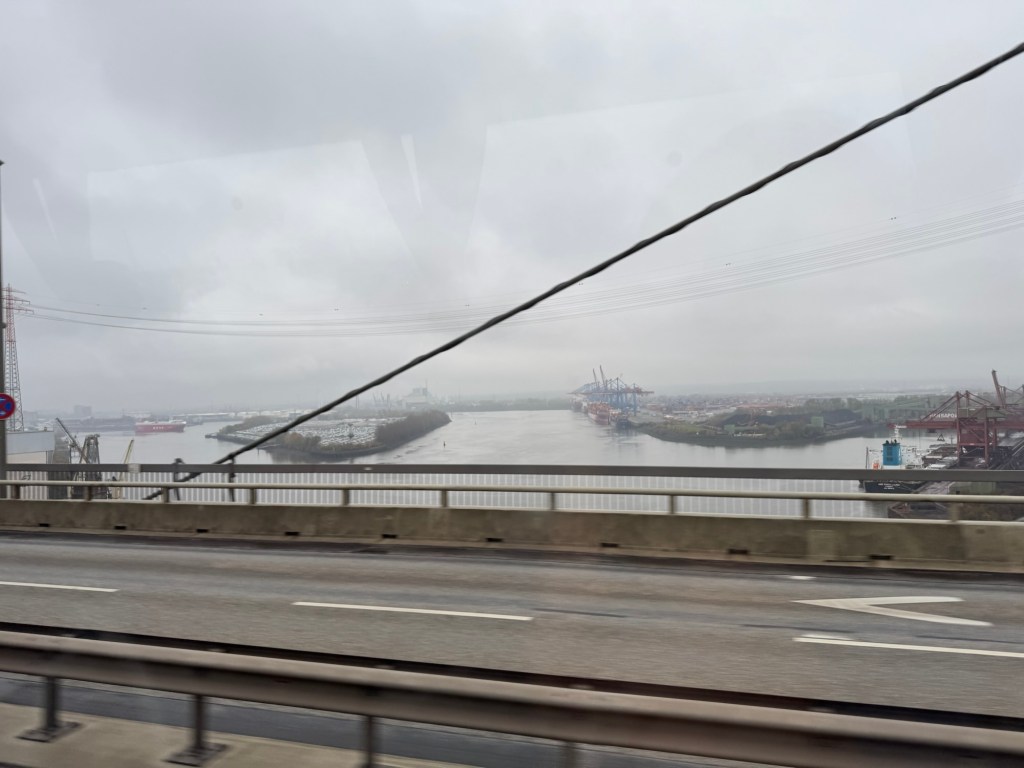
A view from the Köhlbrandbrücke.
Also from the Köhlbrandbrücke
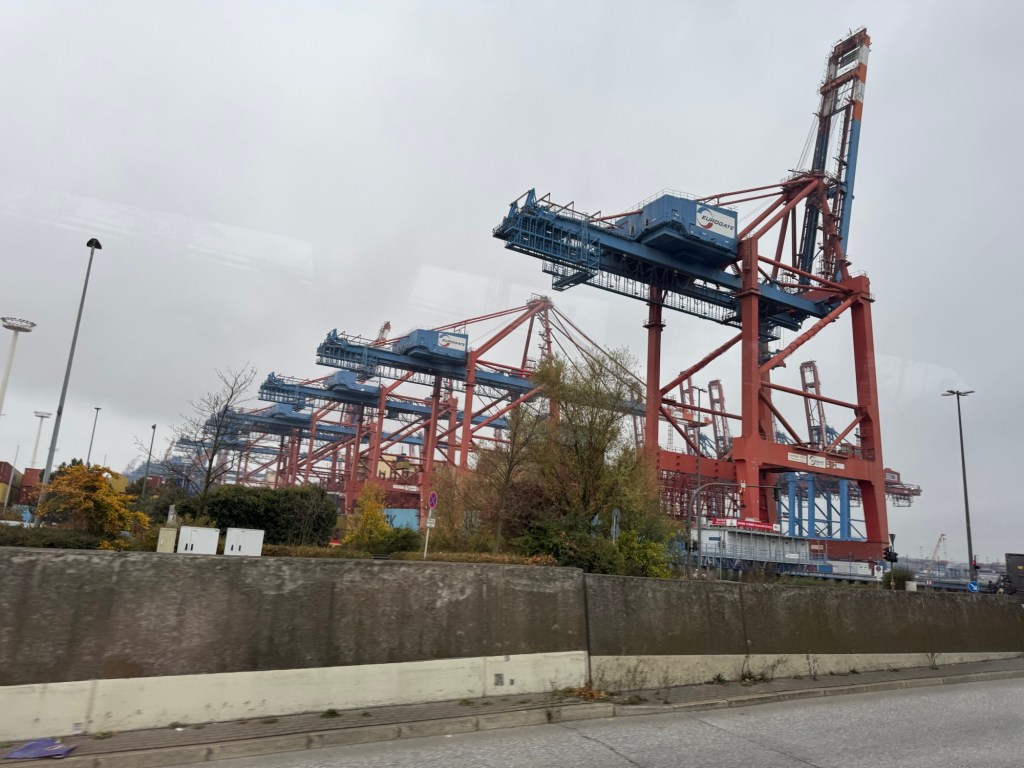
Cranes for moving containers
Vehicles for moving the containers.
On a bus tour

There is of course the Reeperbahn

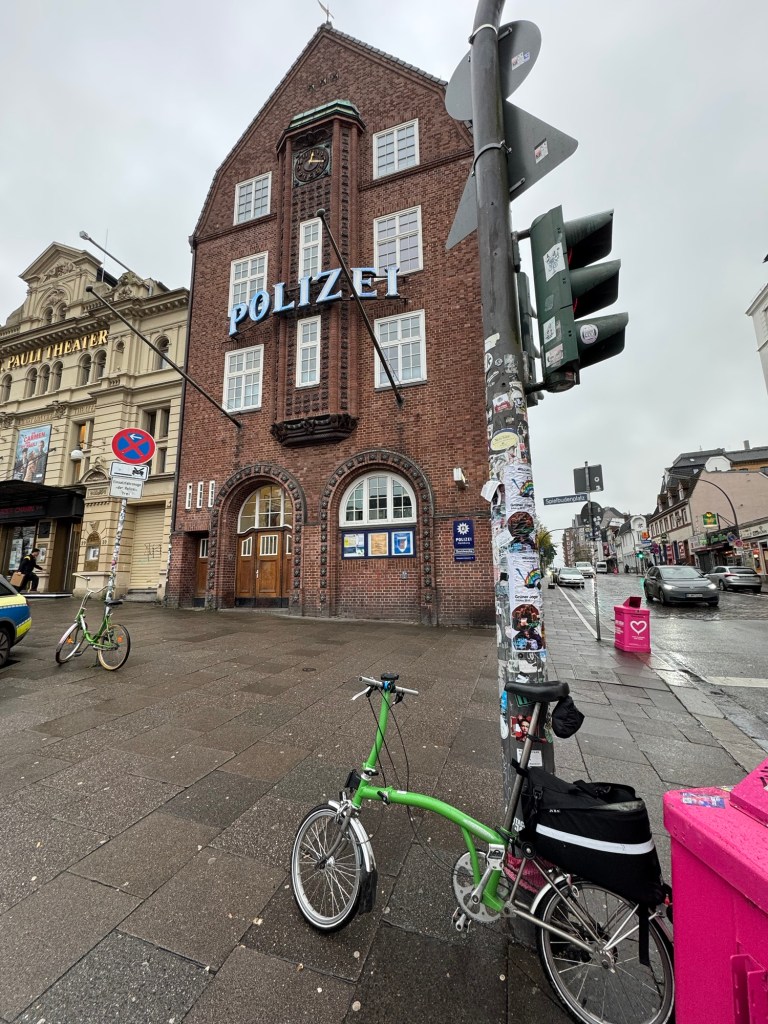
The Davidwache-the famous police station.
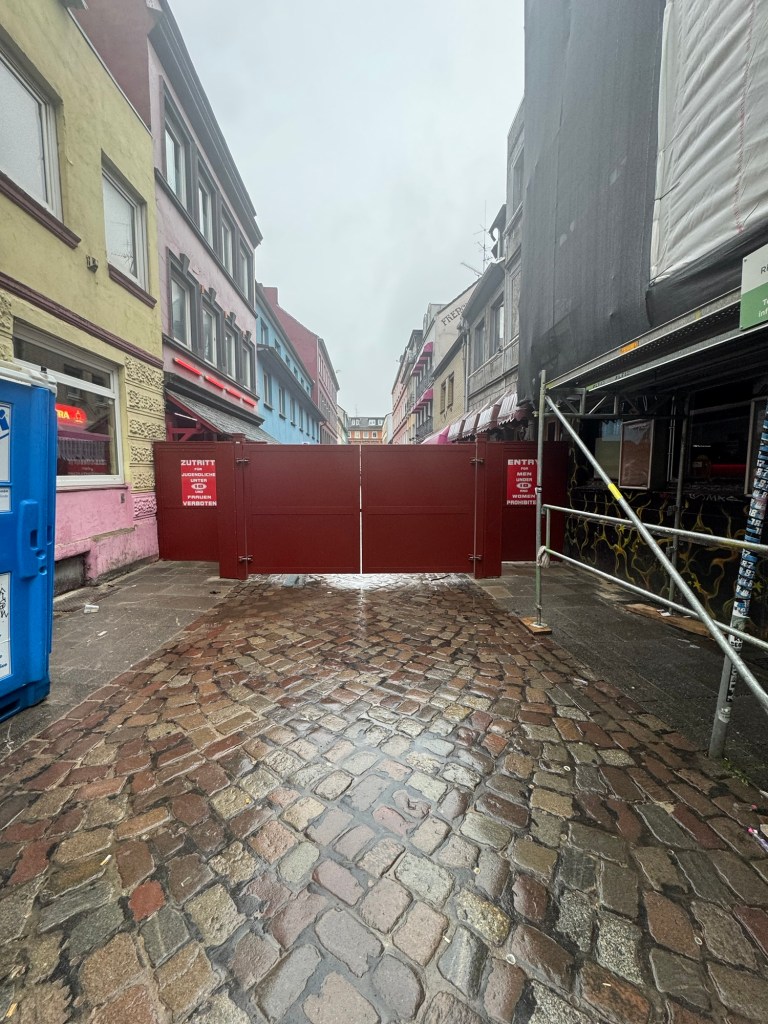
Just off Davidstraße is Herbertstaße. No men under 18 and no women allowed.

A few more Elbe related pictures.

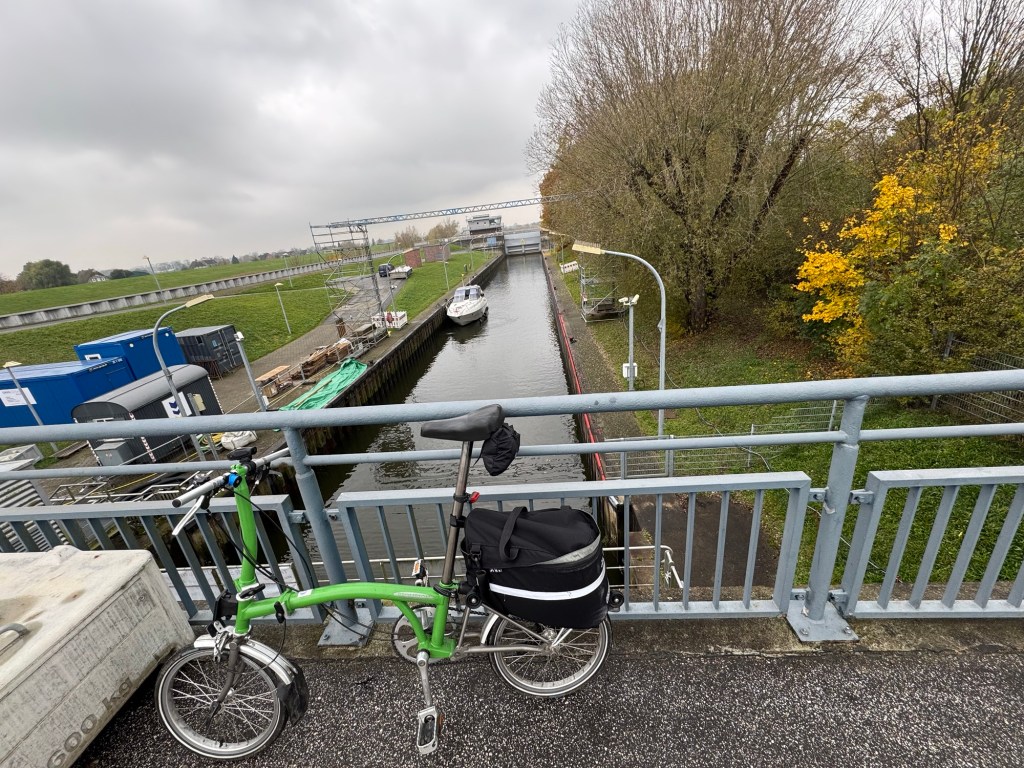
Lock at Moorfleet.
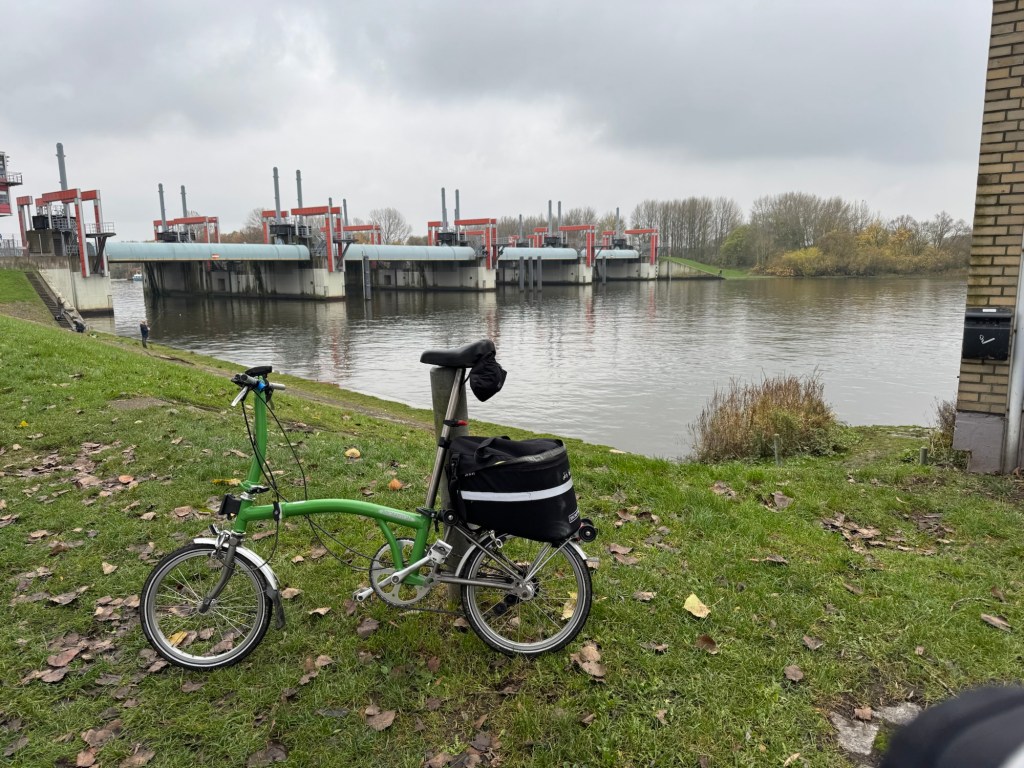
Flood control barriers at Moorfleet.
Neue Elbbrücke.
Near Hammerbrook

Hamburg is a a beautiful city but like many cities it suffers from the dominance of cars. The roads are crowded with cars and the seems to be little observance of the 50km/h speed limit. Unpleasant!

There is good provision for cyclists, but could be better. Occasionally the routes are not clear and there are frequent road works which particularly seem to affect the cycle paths. Touring Hamburg on the bike was fun.

And a tip for rainy days. Buy a HVV day ticket and travel on the U3 , which does a loop, mostly above ground, sometimes elevated.

Environment, Travel

Coast to coast north south north by train

Low cloud in the far north

This journey, starting in the far north of Scotland, visiting Oxfordshire (twice), London, West Sussex, Poole, Surrey, Cheshire , Liverpool and Inverness.

Cloud still low
Rain has started
Change to the Caledonian Sleeper at Inverness.
Sunny breakfast on the move

No dishwasher working on the train, hence the disposable cup.

Sunny at Euston

The only issue on the cycle to Paddington was a close pass from a speeding motorcyclist. Why are they allowed in the bus lanes and why can’t they ride better?

Paddington

After chatting to the man on the train doing the food trolley he said he would give me a free tea, if he got time before Didcot. Very kind.

Vapour trails
Free tea
The Thames
Didcot
Didcot again

First train issue- train to Paddington delayed so caught a different train.

Cycle across London in glorious sunshine, taking in Buckingham Palace, Houses of Parliament, London Eye…

I came across a new menace in London, motorised skateboards exclusively ridden by idiots. These are not legally allowed to be used on pavements, roads or cycle paths. What happens if collide with an illegal vehicle, with no insurance and no sense?

After a stay in London I trained on from south London via London Bridge to Sussex.

Eastbourne Pier
Eastbourne Pier from a different angle

The trip included cycling on the wonderful cuckoo trail. Lots of birdsong but no cuckoos heard,

Sunny view of the sea
Back on the train again at Eastbourne
Early start, so breakfast on the train
A green interlude
Brighton
Brighton station
River Itchen
Southampton station
Near Christchurch

A stop in Poole then back on the train.

Always end up in Reading 🙂
A rainy view of the Thames
After a wet ride from Didcot Station
Oops, accidentally got on first class at Didcot- on a crowded train

Change at Reading, on to Ash.

Ash

Fun at Ash, delayed train from Guildford due to something being thrown on the line.

A stay in Surrey for the weekend.

Leaving Farnham
London

Another cycle across London.

Euston station
Berkhamsted?
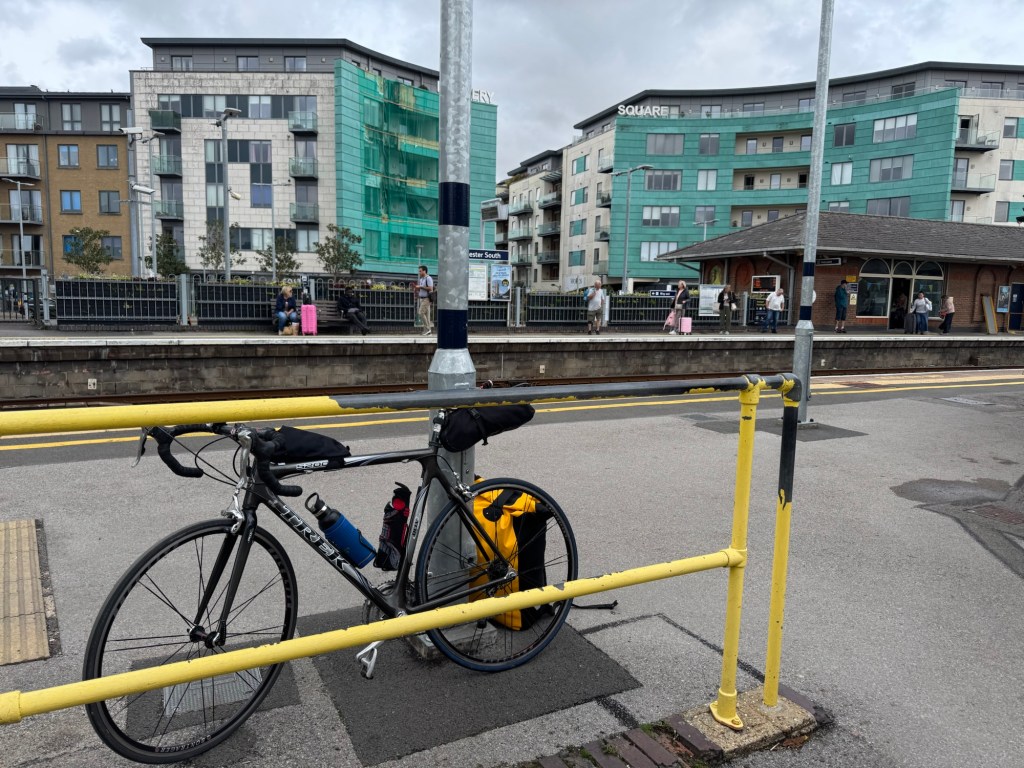
Chester station
Capenhurst
Liverpool

Things started going pear shaped at Liverpool from where I was trying to travel to Inverness.

Liverpool station

Caught an earlier train , which I was only able to do due to having arrived early at Liverpool.

Change at Preston for Edinburgh
Passing through Lancaster
Back into Scotland- sun getting low

The train got stopped, so my connection at Haymarket started looking unsafe,

Edinburgh Airport

Despite warning the conductor and his best efforts we missed the connection to Inverness. ScotRail refused to hold their train. Splitting up British Rail was not a good idea.

Shoved on a train to Perth.

Sun setting on the Forth
I did not expect to be going through Kilcardy

After a late taxi ride from Perth to Inverness I eventually got to bed.

Up bright and early
Back at Inverness station
Crossing the river Ness
Near Lairg
Sunny with a blue sea near Brora.
River Helmsdale
Near Kinbrace
Preparing to disembark
Environment, Travel

Weather warnings!

A journey to the south which almost didn’t happen. It’s Monday 5th February. The last train of the day from the far north already cancelled the previous day, in anticipation of bad weather. The early afternoon train also gets cancelled on the day, due to landslides on the Far North line. No trains from Inverness to Edinburgh due to flooding near Kingussie. All looking bleak for a journey south.

This is the result of the rain forecast, the first yellow weather warning of the trip.

A lift to Inverness followed by a replacement bus to Edinburgh means I get to board the sleeper just before midnight. I am then woken up for breakfast at 0415 ready to get off at Crewe. Sleep deprivation!

More weather warnings: rain in South England, snow in mid to North England, snow in North Scotland, ready for the return trip.

Wet! At Didcot.

The cycle to Didcot on Thursday is wet, as is the ride across London from Paddington to Euston. My feet are soaked.

Outside the new Caledonian Sleeper guest lounge.

This is my first time in the Caledonian Sleeper guest lounge. Limited choice of food, but some is complimentary. A chance to change to dry footwear and use the toilet. There is also speedy boarding passes, making getting on the sleeper far easier. A big plus.

I wake up to have breakfast in the snowy Highlands.
 
Carrbridge
Arrived on time in Inverness.

On with the journey on the far north line, which appears to be running. There are more snowy views.

Lairg
Rogart
The sea near Helmsdale is wild.
Snowy flow country
Thurso River

Despite the multiple weather warnings the trip back is without issue.